Published · Updated
Plant watermelon outside after the last spring frost, once the soil is at least 60 to 65°F. Use 70°F if your spring swings between warm days and cold nights. Start transplants indoors 3 to 4 weeks before you plant them out. Most varieties need 70 to 130 days, so count back from your first fall frost.
Watermelon is tender and slow. A cool week stalls it. A wet, cold week can rot the seed. And the fruit takes so long to ripen that planting too late is just as risky as planting too early. This guide shows what six extension sources say about soil, frost, transplants and the last safe planting date. It also shows where they disagree and works through the date math. The dates in the examples are made up, so swap in your own.
Last verified: November 18, 2026. Sources are listed at the end.
When is it safe to plant watermelon outside?
It is safe after your last spring frost has passed and the soil has warmed. Clemson Cooperative Extension says not to plant watermelon in spring until after the last chance of frost. The University of Arkansas calls it a “very tender annual.” Watermelon grows best when the air averages 70 to 85°F, according to Clemson and North Carolina State Extension.
Your last frost date is the usual date of the final spring frost where you live. It is a chance, not a promise. If you are new to the idea, read how to use frost dates without treating them as a forecast. You can look up your own date with the tool on the frost dates page. A light frost and a hard freeze do different damage, and frost vs freeze explains the gap. For watermelon, plan around both.
The frost date only opens the door. Watermelon seed wants warmer ground than a frost-free calendar date can promise. That is why most of the sources below tell you to check the soil before you plant.
What soil temperature does watermelon need?
The sources give a range of 60 to 70°F. Watermelon seed does not sprout well in cold soil, and cold, wet soil invites rot. Here is what six extension sources say.
| Source | What it says about planting |
|---|---|
| Clemson Cooperative Extension (HGIC 1325, updated Feb. 3, 2023) | Soil at 4 inches deep should be 60 to 65°F. Do not plant until after the last chance of frost. |
| N.C. Cooperative Extension, Franklin County (July 2024, updated Dec. 3, 2024) | Soil at 3 to 4 inches deep should be 60 to 65°F. Air should average 70 to 85°F. |
| Iowa State University Extension (last reviewed July 2024) | Plant after frost danger is past and soil has warmed to 60 to 70°F. |
| University of Arkansas (FSA6012) | Plant when soil is 62°F or warmer and all frost danger is past. |
| University of Georgia Extension (Circular 1035, reviewed July 13, 2022) | Soil should reach 65 to 70°F before planting. Wait until days are steadily sunny and warm. |
| University of Minnesota Extension (reviewed 2026) | Plant only after soil in the top 2 inches reaches 65°F and nights as well as days are warm. |
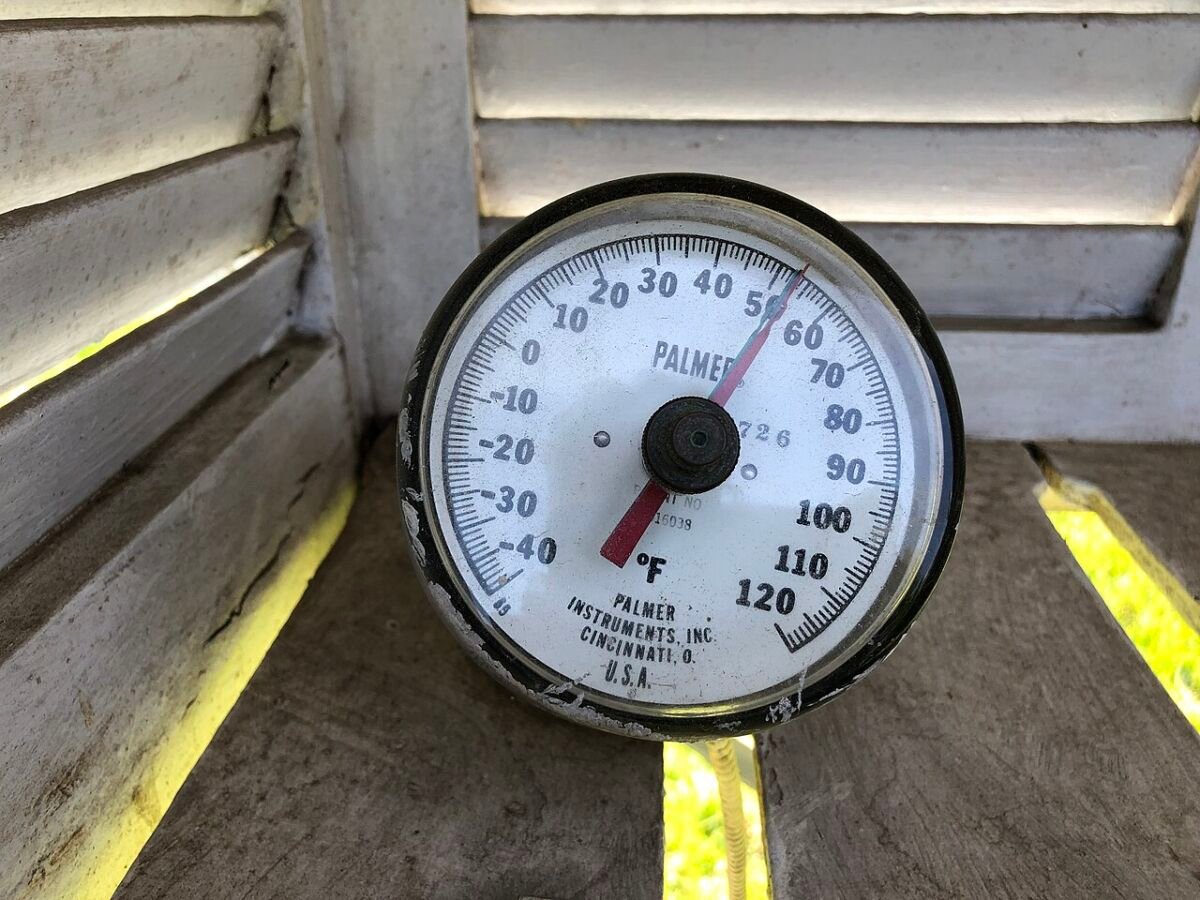
Why the spread? Some of it is where you measure. Clemson reads at 4 inches, Minnesota at 2. Some of it is place. Minnesota’s guide says its soils freeze deeply in winter and warm slowly, and that most southern Minnesota soils are not warm enough for melons until after May 20. Minnesota also warns that planting into cooler soil can bring root diseases that stunt or kill plants, even if they look fine at first.
Our reading is simple. If your spring is steady and warm, 60 to 65°F is the floor. If it swings, wait for 65 to 70°F and for warm nights. A cheap soil thermometer settles the question. Take the reading in the morning, when the soil is at its coolest. Our guide on why soil temperature matters more than a warm afternoon shows how to take a good reading.
Should you sow watermelon seed outside or set out transplants?
Both work. Transplants can give you a head start, but the plants are touchy about root damage. Which one is better depends on how long your warm season lasts.
The case for transplants is time. Clemson says transplants can be harvested up to two weeks earlier than melons grown from seed in the ground. Minnesota says transplanting can add two to four weeks to the growing season. In a short-season area, that matters.
The case for seed is safety. Minnesota says melons are especially sensitive to root disturbance, and a broken root can leave a plant stunted for the whole season. Arkansas says large watermelon plants transplant poorly, and that bare-rooted plants do not do well. Georgia warns that seed sown into cool soil can damp off, which means the seedlings rot at the soil line and fall over.
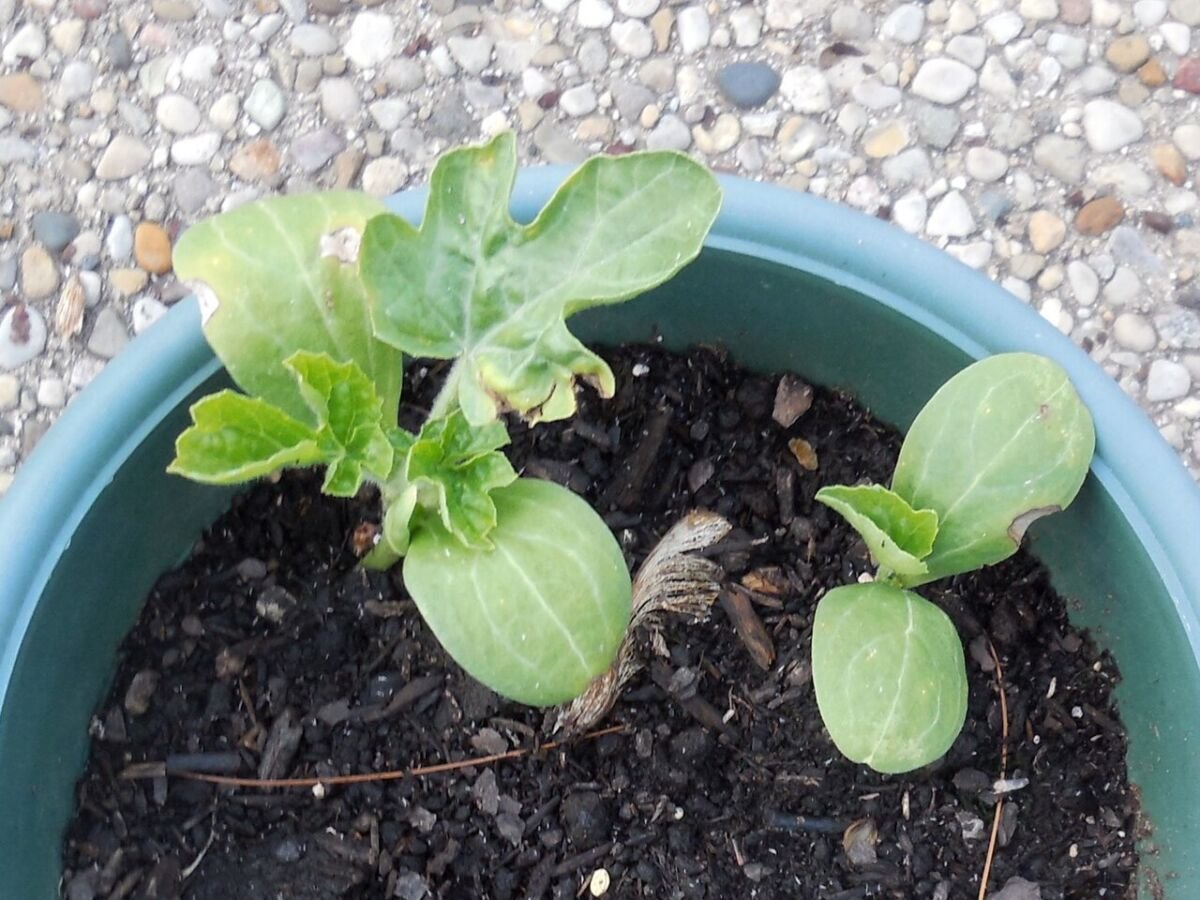
If you grow transplants, the sources agree on the method:
- Use peat pots or other pots that go into the ground whole. Iowa State says this causes little root damage. Minnesota suggests pots about 4 inches wide, which is bigger than for most vegetables.
- Give the seed heat. Minnesota calls bottom heat essential, and Arkansas says seedless types need 80 to 85°F to sprout.
- Move plants out young. Iowa State says to transplant at 1 or 2 true leaves. Minnesota says 2 or 3.
- Harden them off first. Georgia leaves seedlings outside for 2 or 3 days and brings them in each night, then leaves them out for a full 24 hours on day four. Our guide on how to harden off seedlings covers the full routine.
If you sow seed in the ground, Iowa State says to plant 4 or 5 seeds per hill, 1 inch deep, then thin to 2 or 3 plants after the seedlings show their first true leaves. Iowa State also says that if conditions are cool and wet, it is better to plant a little later than to risk losing plants to damping off.
How do you count back to start watermelon seeds indoors?
Pick the date you plan to plant outside, then subtract. The catch is that the sources count from different starting points. Here is how the same garden looks under each rule, with made-up dates.
- Your last frost date is May 10. You expect the soil to hit 65°F around May 24.
- Iowa State counts 3 to 4 weeks back from the planting date. That means sowing between April 26 and May 3.
- Arkansas counts about 3 weeks back from the day you set plants out. That is May 3.
- Minnesota counts 2 to 4 weeks back from the last frost date. That means sowing between April 12 and April 26.
- Georgia counts 4 to 5 weeks back from the last frost date. That means sowing between April 5 and April 12.
Look at what that does to the seedlings. Georgia’s rule would give you plants that are 6 to 7 weeks old on May 24. Iowa’s and Arkansas’s rules give you plants that are 3 to 4 weeks old. Arkansas warns that large plants transplant poorly, and Minnesota warns that root damage can stunt a plant for the whole season. So we would count back from the planting date and not from the frost date. That is our reading, not a rule from the sources. Georgia’s rule fits Georgia, where planting follows the last frost closely. For more on this method, see planning indoor seed starting backward from transplanting and when to start seeds indoors.
One line in the Minnesota guide looks like it disagrees. Its quick-facts box says to plant melon seed 1 week to 10 days before the average last frost date. The body of the same guide says to wait for 65°F soil and warm nights. It also says soils in the southern half of the state are rarely ready before May 20. When the two clash, go with the soil.
What planting dates do extension guides give by state?
Extension guides give planting windows for their own states. They show how far the date moves from south to north. Use them as examples, not as your dates.
| Place and source | Planting window |
|---|---|
| South Carolina Coastal (Clemson) | April 1 to April 30 |
| South Carolina Piedmont (Clemson) | April 15 to June 15 |
| Southern Arkansas (University of Arkansas) | April 15 to May 1 |
| Northern Arkansas (University of Arkansas) | May 10 to May 15 |
| Central Iowa (Iowa State) | Mid-May. One week earlier in the south, one week later in the north. |
| Minnesota (University of Minnesota) | Mid-May in the south to late June in the north, for seed or transplants |
Minnesota’s window needs a note. The same guide says southern soils are rarely warm enough before May 20. So “mid-May” is the earliest date in a warm year, and the soil reading still has the final say.
What is the latest date to plant watermelon?
Take your first fall frost date and subtract the days to maturity. The answer is the last day you can plant. Watermelon is a long crop, so this date can come sooner than you expect.
The ranges differ by source. Georgia gives 70 to 90 days. Clemson and North Carolina State list varieties at 85 to 90 days. The Arkansas guide gives 70 to 130 days. Minnesota says only varieties under 90 days can ripen in its north, and that varieties of 65 to 80 days improve your odds. Check your seed packet for the real number for your variety.
Also check where the count starts. Clemson says 85 to 90 days from transplant to the first ripe fruit. North Carolina State words the same figure as days from seeding. The sources do not settle it, so treat the packet as the guide and add a cushion.
Here is a made-up example. Say your first fall frost usually arrives October 15. The 14-day cushion is our own rule of thumb, because plants slow down as nights cool. It is not a figure from the sources.
| Days to maturity | Latest planting date | With a 14-day cushion |
|---|---|---|
| 70 days (short end of Georgia and Arkansas ranges) | Aug. 6 | Jul. 23 |
| 90 days (top of Georgia’s range, Clemson varieties) | Jul. 17 | Jul. 3 |
| 130 days (top of Arkansas’s range) | Jun. 7 | May 24 |
A real-world check helps. Iowa State says the last practical date to sow early-maturing watermelon in Iowa is June 20. Clemson does not recommend a fall crop of watermelon in either South Carolina region. For a general method to count back from frost, see when to plant a fall garden. A late planting can also mean more insect trouble. Georgia says later-planted crops generally have more problems with insects.
Can plastic mulch and row covers let you plant earlier?
They can move your planting date up a little. They cannot make cold soil safe. Minnesota says soil-warming mulch, hot caps and low tunnels can let you plant two or three weeks earlier. Clemson says black plastic mulch warms the soil quickly, saves moisture, controls weeds and cuts fruit rot.
Each tool has a catch:
- Black plastic: Iowa State says to lay it over moist soil on a calm day, because plastic over dry soil slows growth. Minnesota says to cut the holes when you plant, not before. Clemson says to spray the plastic white if a second crop goes on it later in the year, because black plastic gets too hot.
- Hot caps and low tunnels: They protect plants in the first weeks. Minnesota says low tunnels are covers held up on wire hoops.
- Clear plastic tunnels: Clemson says these need vent slits, because temperatures under them can get hot enough to stunt plants.
- Taking covers off: Minnesota and Clemson both say to remove covers so pollinators can reach the flowers. Iowa State says to take row covers off at the first bloom.
- Straw and compost mulch: Minnesota says to wait until the soil is 75°F. Organic mulch laid too soon slows the soil from warming.
Covers are for a light frost or a cool night. For a hard freeze, see how to protect plants from frost.
Does seedless watermelon change the planting plan?
Yes, in two ways. Seedless watermelon needs warmer conditions to sprout, and it cannot pollinate itself. Clemson says seedless types have no usable pollen. You must plant a seeded variety within 10 feet to set fruit.
The sources give different ratios. Arkansas suggests one row of a standard seeded variety for every three rows of seedless melons. Iowa State says seedless seed packets often include pollinator seed. It adds that you should choose a pollinator with a different rind pattern, so you can tell the seedless fruit apart. Fruit from the pollinator plants is also edible, Iowa State notes. Minnesota adds that seedless varieties still need pollination, so you must grow both types to get any seedless fruit.
For sprouting, Arkansas says seedless types need 80 to 85°F, so start them indoors on a heat source. That makes seedless watermelon a better fit for transplants than for seed sown in cool ground.
How much room does watermelon need?
A lot, and the room affects what else you can plant nearby. Clemson and North Carolina State say to set rows 6 to 8 feet apart, with plants 5 to 6 feet apart in the row. Both give a rule of thumb of 24 square feet per plant. Other sources use hills. Arkansas suggests hills 6 feet apart. Georgia says 8 feet on all sides. Iowa State says hills 2 to 3 feet apart in rows 6 to 8 feet apart.
Iowa State expects about 2 to 3 melons per plant. If you have a small garden, that tells you how few plants to buy. Clemson and Iowa State both say not to plant watermelon where melons, cucumbers, squash or pumpkins grew in the last 3 to 4 years. If you also grow those crops, see our guides to squash and zucchini and cucumbers, and plan the beds together.
How do you know when watermelon is ripe?
Ripeness tells you if your planting date worked, and it is hard to judge. The best method is to use several signs together. Clemson lists four: the fruit reaches its expected size, the tendril nearest the fruit turns brown, the skin loses its shine, and the bottom has a large white-to-cream spot.
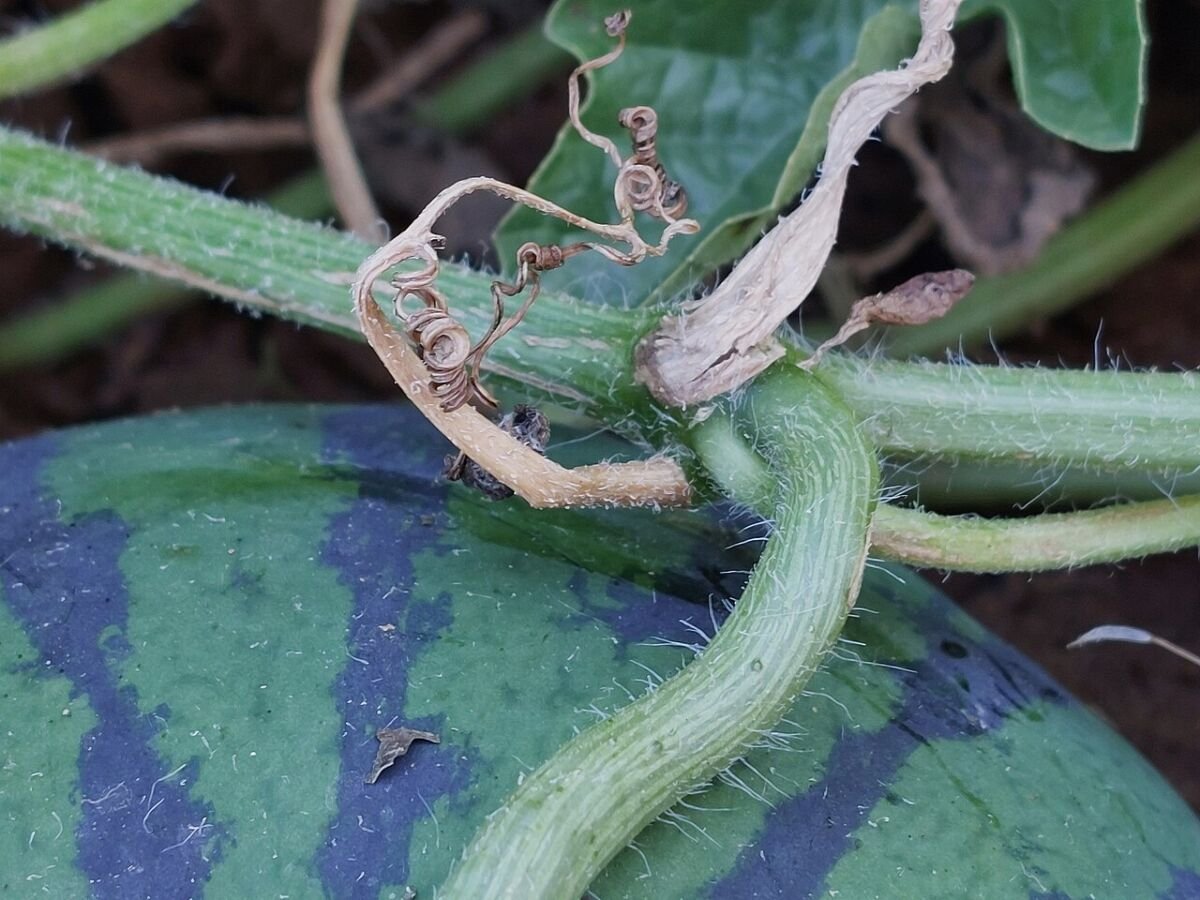
Do not trust one sign alone. Iowa State says the tendril can turn brown 7 to 10 days before the melon is ripe in some varieties. It also says thumping is a poor test, because most people cannot tell the sounds apart. Arkansas agrees that thumping varies. Clemson says fruit ripens about 35 days after it sets, and North Carolina State says 35 to 40 days. If you note the day you see a small fruit, you can plan your first check.
What mistakes should you avoid?
- Planting on the frost date. Use it as a starting point. The soil and the forecast decide.
- Trusting air temperature. A warm afternoon can sit on top of cold soil.
- Starting seed too early. Big seedlings suffer more when you move them.
- Using straw mulch too soon. Minnesota says to wait for 75°F soil.
- Leaving covers on during bloom. Bees cannot reach the flowers.
- Skipping the pollinator. Seedless plants alone will not set fruit.
- Sowing too late. Count back from your first fall frost before you buy seed.
When can you skip parts of this plan?
If your area has no frost, skip the frost step and use the soil mark alone. If your growing season is long and spring warms early, you may not need indoor starts at all, and seed in the ground avoids transplant shock. If you garden in a short-season area, transplants, black plastic and an early variety all help, according to the sources above. A low spot or an open field will also cool differently from a bed by a south wall, so read about garden microclimates before you pick a spot. The same planting logic applies to other warm-season crops, including tomatoes, peppers, eggplant and sweet corn.
Watermelon planting questions
Can I plant watermelon before the last frost date?
Not safely. Clemson says not to plant until after the last chance of frost. If you try, have hot caps or row covers ready for cold nights.
Is 60°F soil warm enough for watermelon?
It is the lowest mark in the sources. Clemson and North Carolina State use 60 to 65°F. Georgia and Minnesota use 65°F or higher. Use the higher number if your spring swings between warm and cold.
How many weeks before planting do I start watermelon seeds indoors?
Iowa State and Arkansas say about 3 to 4 weeks before you plant out. Minnesota says 2 to 4 weeks before the last frost. Georgia says 4 to 5 weeks before the last frost.
What is the latest date to plant watermelon?
Count back from your first fall frost using the days to maturity on your seed packet. Iowa State gives June 20 as the last practical sowing date for early varieties in Iowa.
Do I need two plants for watermelon to set fruit?
Seeded watermelon has separate male and female flowers on the same plant, according to Iowa State, so bees can move pollen within one plant. Seedless types need a seeded pollinator within 10 feet, according to Clemson.
How long does watermelon take to ripen?
The sources range from 70 to 90 days in Georgia to 70 to 130 days in Arkansas. Clemson says fruit is ripe about 35 days after it sets.
Do transplants ripen sooner than seed?
Often, yes. Clemson says transplants can be harvested up to two weeks earlier than melons grown from seed in the ground. Minnesota says transplants can add two to four weeks to the season.
Sources
- Clemson Cooperative Extension Home & Garden Information Center, “Watermelons,” HGIC 1325 (updated February 3, 2023). Recommendations are for South Carolina.
- Iowa State University Extension and Outreach, “Growing Watermelon in the Home Garden” (last reviewed July 2024).
- University of Georgia Cooperative Extension, “Home Garden Watermelon,” Circular 1035 (full review July 13, 2022).
- University of Arkansas Division of Agriculture, “Watermelons,” FSA6012 (undated revision).
- University of Minnesota Extension, “Growing melons in the home garden” (reviewed 2026).
- N.C. Cooperative Extension, Franklin County Center, “Watermelons in the Home Garden” (July 16, 2024, updated December 3, 2024).
Image credits: Young watermelon plant (featured image), Forest and Kim Starr, CC BY 3.0 US, Wikimedia Commons. Other credits appear under each photo.
Published by Sajib Saha, a web developer and SEO specialist. This guide is compiled from the extension sources named above, not from personal horticultural credentials. See About and our editorial policy.