Published
Plant cucumbers outside after the last frost, once the soil is at least 70°F an inch down. Iowa State accepts 60 to 70°F, but Minnesota and Clemson extension guides both use 70°F. Cold soil stalls the seed, and a light frost can kill the plant. Direct seeding is usually the best choice.
Cucumbers do badly with an early start. A cold week can stop growth, and one frosty night can end the plant. This guide pulls together three university extension sources, shows where they disagree and why, and walks through a worked date example you can copy for your own garden.
Last verified: November 5, 2026. Sources are listed at the end.
When is it safe to plant cucumbers outside?
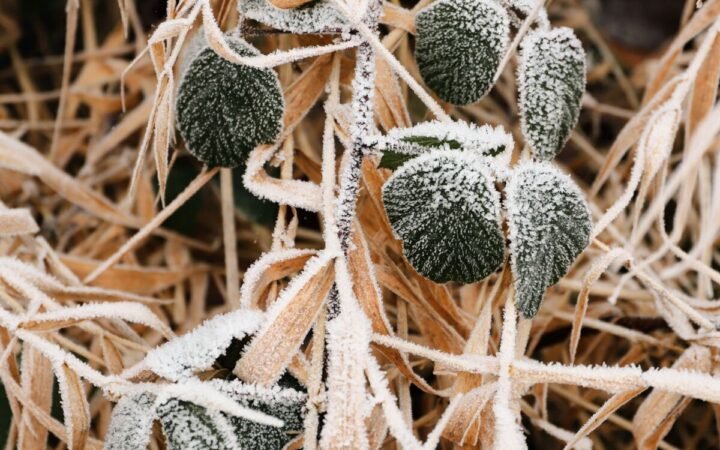
It is safe once frost is behind you and the soil has warmed. Clemson Cooperative Extension says cucumber “is very tender and can be killed by light frosts.” The University of Minnesota Extension says the plants “cannot survive freezing temperatures,” so you should set them out after the last frost date.
A last frost date is the usual date of the final spring frost in your area. It comes from weather records, and it is a chance, not a promise. If you have never used one, read how to use frost dates without treating them as a forecast. You can look up your own date with the tool on the GardenClock homepage.
Not sure how bad a frost has to be to hurt? Cucumbers have no tolerance for either kind. Our page on frost vs freeze explains the difference. For cucumbers it does not matter: wait until both are over.
What soil temperature do cucumbers need?
Most sources point to 70°F. That is the mark that shows up in two of the three guides below, and it is the safer number for a home gardener. Iowa State is a little more relaxed, and Clemson adds a hard floor for germination.
| Source | Soil temperature guidance |
|---|---|
| Iowa State University Extension (page updated Dec. 3, 2024) | Plant after frost danger is past and soil has warmed to 60 to 70°F. |
| University of Minnesota Extension (reviewed 2026) | Sow once soil is at least 70°F at the one-inch depth. Seeds will not sprout in cold soil. |
| Clemson Cooperative Extension (HGIC 1309, updated Jan. 2023) | Plant when soil reaches 70°F. Seeds will not germinate below 50°F. |
Why the gap? Iowa State gives a range, and the low end is the earliest you could get away with it. Clemson’s 50°F number is the point where seeds give up completely, not a good planting temperature. If you can wait for 70°F, do. If your season is short, 65°F is a judgement call, and you should be ready to cover plants on a cold night.

A cheap soil thermometer settles the question. Minnesota’s guide says to read it one inch down, which is the depth where the seed will sit. Air temperature fools people, because a warm afternoon can sit over cold soil. Our guide on why soil temperature matters more than a warm afternoon shows how to take a good reading.
Should you sow seed or set out transplants?
Sow seed, unless you have a reason not to. The University of Minnesota Extension says “the best way to start cucumbers is direct seeding.” Transplants save a little time, but the roots do not like being moved.
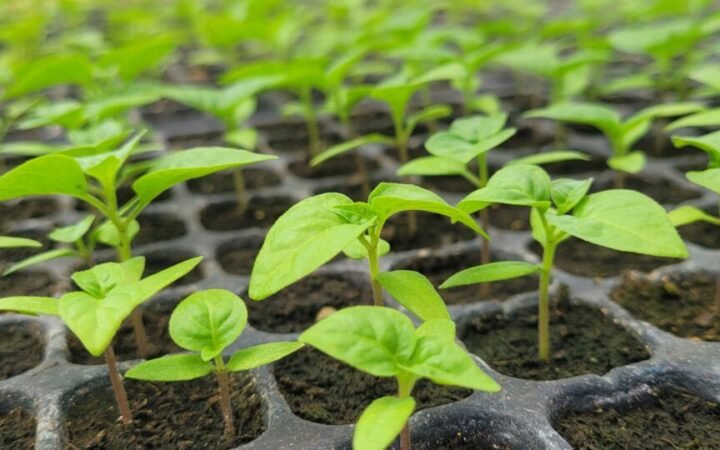
If you still want a head start, both extension sources set limits. Minnesota says to start seeds indoors no earlier than four weeks before the last frost date, in peat pots that can go straight into the soil. It also warns you not to damage the taproot, which is the main central root. Clemson says seeds may be started indoors two to three weeks before planting outdoors.
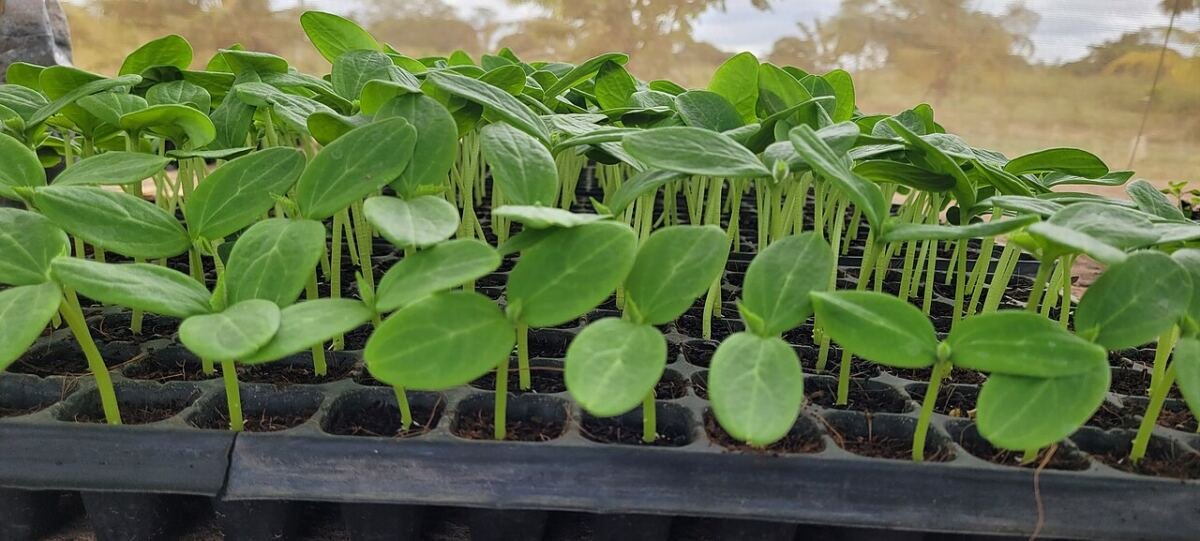
The trade-off is simple. Direct seeding costs you a few weeks of the season but avoids root damage. Transplants gain those weeks but can stall if you handle them roughly. Do not start them too early. A big root-bound seedling does worse than a small one. For the full backward-counting method, see when to start seeds indoors.
How do you work out your own planting date?
Start from your last frost date, then let the soil have the final say. Here is a worked example. The date below is made up to show the steps. Swap in your own.
- Find your last frost date. Say it is May 10.
- Do not plant on May 10. It is the date after which frost gets less likely, not the date it ends.
- Count back for transplants. Minnesota’s four-week limit gives April 12 as the earliest indoor start. Clemson’s two to three weeks before setting out would put a May 17 planting out at about April 26 to May 3.
- Check the soil. Push a thermometer one inch down in the morning. If it reads 70°F or more and the forecast shows no frost, sow seed.
- If soil is still cold, wait. A week’s delay costs little. A cold-stunted plant can cost you the month.
Notice that the plan never says “plant on May 10.” It gives you a window and two checks. That is how the extension guides read once you put them side by side.
How much does your location change the date?
A lot, and the sources show it. They were written for different states, so use them as examples of the spread, not as your date.
| Place and source | Spring planting guidance |
|---|---|
| Central Iowa (Iowa State) | Mid-May. Plant about one week earlier in southern Iowa and one week later in the north. |
| Most of Minnesota (University of Minnesota) | Late May, after soil warms. The guide says “usually in May.” |
| South Carolina Piedmont (Clemson) | April 15 to June 5. |
| South Carolina Coastal (Clemson) | March 15 to May 15. |
Even inside one yard the date can shift, because low ground and open spots cool off differently from a bed by a fence. See garden microclimates for how to spot your cold corners before you plant.
Can row covers or black plastic let you plant earlier?
They can help, but they do not beat a hard freeze. The University of Minnesota Extension says plastic mulch and row covers allow earlier planting. Black plastic mulch raises soil temperature. Spun row covers raise the air temperature around plants and protect them from cold nights.
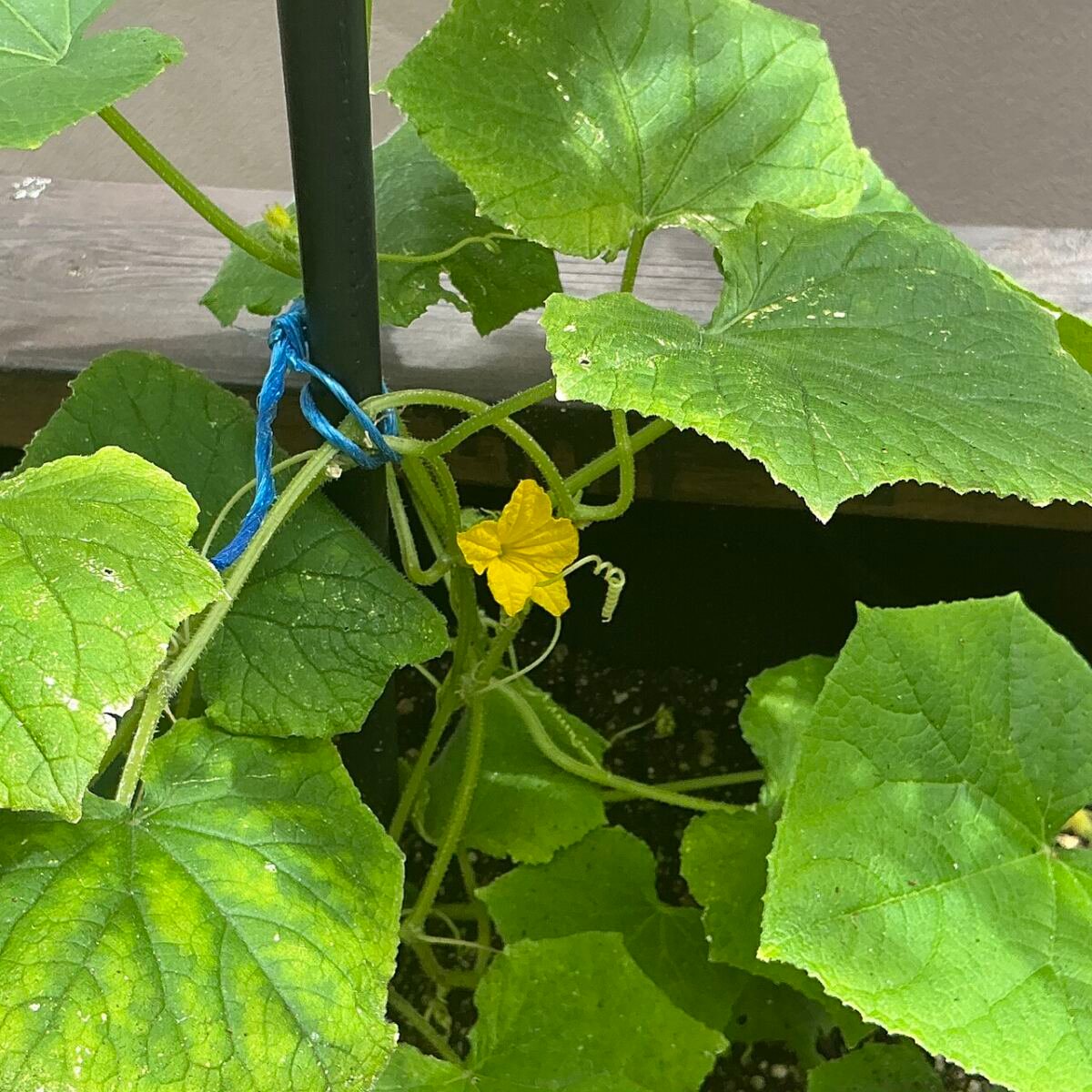
There is one rule to follow. Minnesota says to remove row covers once flowering begins, unless the variety is seedless, because covers keep out the insects that pollinate the flowers. In plain words: cover young plants for warmth, then take the cover off when you see yellow blossoms.
How far apart should cucumbers be planted?
It depends on how you plant: in hills, in rows, or along a trellis. A hill is a small group of seeds sown close together in one spot. The three guides use different layouts, so their numbers look different, but they do not contradict each other.
| Source | Seed depth | Layout |
|---|---|---|
| Iowa State | 1 inch | 4 to 5 seeds per hill, thinned to 2 or 3 plants. Hills 3 to 5 feet apart, rows 4 to 5 feet apart. Bush types: 3 feet. |
| University of Minnesota | 1/2 inch | Vining types: seeds 2 inches apart in a row, thinned to 8 to 12 inches. Hills of 3 or 4 seeds, 5 to 6 feet apart. Trellis of 3 to 4 feet. |
| Clemson | Not stated | Without a trellis: plants 8 to 10 inches apart, rows 5 feet apart. With a trellis: 4 to 5 seeds per foot, rows 3 feet apart, thinned to 9 to 12 inches. |
The seed depth is the one real mismatch, half an inch against one inch. If your seed packet gives a depth, follow it. Trellised cucumbers can sit much closer, since the vines grow up instead of out. Thin the extra seedlings early, while they have only one or two true leaves, as Iowa State advises.
When is it too late to plant cucumbers?
Count back from your first fall frost. Iowa State says the last practical date to sow cucumbers in Iowa is July 20. Clemson lists fall planting from August 1 to September 30 in the South Carolina Piedmont and August 1 to August 30 on the coast, and says cucumbers are ready to harvest in about 50 to 70 days, depending on the variety.
Here is the arithmetic with a made-up date. If your first fall frost usually comes October 10 and your variety needs 60 days, the latest sowing date is August 11. Add a week or two of cushion, because plants slow down as days shorten and nights cool. That puts the sowing date in late July or early August. Our post on planting a fall garden covers the counting method in full.
What mistakes should you avoid?
- Planting on the frost date. The date is a starting point. Soil and forecast decide.
- Trusting air temperature. A warm day does not mean warm soil.
- Breaking the taproot. Use peat pots that go in the ground, or skip transplants.
- Leaving covers on during flowering. Pollinating insects need to reach the blooms.
- Starting seeds indoors too early. Four weeks before the last frost is the outer limit in Minnesota’s guide.
Compare this to other warm-season crops. Tomatoes and peppers have their own night-temperature rules, and green beans have a soil rule much like cucumbers. Each crop gets its own page because the cold limits differ.
When can you skip parts of this plan?
If your area has no frost, skip the frost step and use the 70°F soil mark alone. If you grow under a greenhouse or high tunnel, the sources here do not cover that, so check with your local extension office. If your seed packet gives a planting date for your region, use it as a cross-check, not a replacement for the soil test.
Cucumber planting questions
Can I plant cucumbers before the last frost date?
Not safely. Clemson says light frosts can kill cucumbers, and Minnesota says to set plants out after the last frost date. If you try it, keep row covers ready for cold nights.
Is 60°F soil warm enough for cucumbers?
It is the low end of Iowa State’s range. Minnesota and Clemson both use 70°F, and Clemson says seeds will not germinate below 50°F. Wait for 70°F when you can.
Should I direct sow or use transplants?
Direct sowing is the best way, according to the University of Minnesota Extension. Use transplants only if you can avoid damaging the taproot, such as with peat pots.
How long until cucumbers are ready to pick?
Clemson says about 50 to 70 days, depending on the variety. Check your seed packet for the exact number.
What is the last date to sow cucumbers?
Iowa State gives July 20 for Iowa. Elsewhere, count back from your first fall frost using your variety’s days to harvest.
When should I remove row covers?
Remove them when flowering begins, unless the variety is seedless. Minnesota says covers keep pollinating insects away from the flowers.
Sources
- Iowa State University Extension and Outreach, “When can I plant cucumbers in the garden?” (updated December 3, 2024).
- University of Minnesota Extension, “Growing cucumbers in home gardens” (reviewed 2026).
- Clemson Cooperative Extension Home & Garden Information Center, “Cucumber,” HGIC 1309 (updated January 2023). Recommendations are for South Carolina.
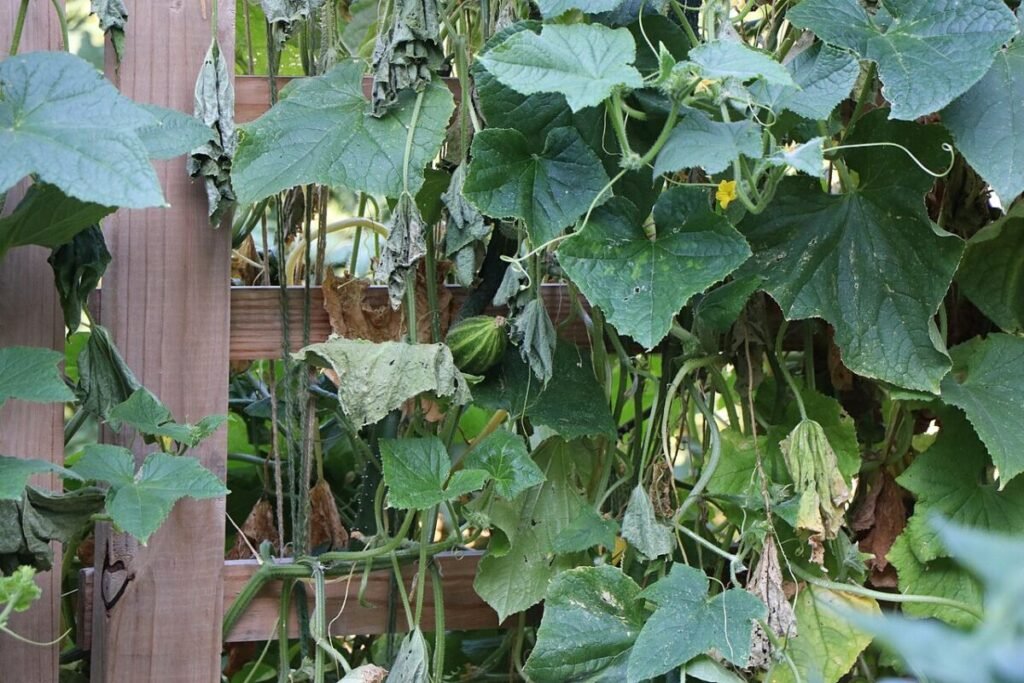
Image credits: Cucumber on a trellis (featured image), National Park Service, public domain, Wikimedia Commons. Other credits appear under each photo.