Published · Updated
Plant pumpkins after your last spring frost, once the soil is at least 65°F. For Halloween, extension services say to sow from late May in the north to early July in the south. Count back from the days to maturity on your seed packet, usually 90 to 120 days, so fruit ripens before the first hard freeze.
Pumpkins are a long, slow crop. They dislike cold ground, and the fruit needs three to four months to ripen. That squeezes the planting date from both sides. Plant too early and a pumpkin can go soft before Halloween. Plant too late and a hard freeze can end the season first. This guide compares what seven university extension services say, shows where they disagree, and works through the date math. The dates in the examples are made up, so swap in your own.
Last verified: November 19, 2026. Sources are listed at the end.
When is it safe to plant pumpkins outside?
It is safe once your last spring frost has passed and the soil has warmed. Illinois Extension calls pumpkin a “very tender vegetable.” Its seeds do not sprout in cold soil, and frost injures the seedlings. Penn State Extension says plants and fruit show damage from even a slight frost, and that growth slows when temperatures fall below 50°F.
Your last frost date is the usual date of the final spring frost where you live. It is an average, not a promise. How to use frost dates without treating them as a forecast covers the idea. You can look up your own date on the frost dates page. A light frost and a hard freeze do different damage, as frost vs freeze explains. Pumpkin sits at the tender end of the scale, far from hardy crops such as peas. The chart in frost tolerance of vegetables shows the difference.
The frost date only opens the first gate. Cold soil is the second, and it comes next.
What soil temperature do pumpkins need?
Most sources say 65°F, measured a few inches down. Here is what each one says.
| Source | Soil rule for planting |
|---|---|
| Illinois Extension | Wait until all danger of frost has passed and the soil has “thoroughly warmed.” No number is given. |
| University of Minnesota Extension (reviewed 2026) | 65°F at 2 inches deep, for seed. Transplants also go out at 65°F or warmer. |
| Utah State University Extension (Feb. 2020) | 65°F. |
| West Virginia University Extension | Above 65°F on a steady basis. |
| University of Arkansas Division of Agriculture (June 2020) | Above 65°F. Seedlings struggle if planted into colder soil. |
| Penn State Extension (updated 2005) | 60°F at 3 inches deep. Seed sown in cool soil may suffer seed corn maggot injury. |
| Mississippi State University Extension (2025) | At least 70°F for seed to germinate. |
The numbers differ for two likely reasons. Penn State’s page was last updated in 2005 and is written for small farms. Mississippi State’s 70°F is a germination figure from a state where spring is warm. Those are our guesses about the gap, not statements from the sources.
A safe rule: use 65°F as your default, and wait for 70°F if your spring swings between warm days and cold nights. Check with a soil thermometer, a few inches down, in the morning, on several days in a row. Mississippi State also says pumpkins start to die after just 48 hours in waterlogged soil, so a warm but soggy bed is not ready either. The method is covered in why soil temperature matters more than a warm afternoon.
What is the best month to plant pumpkins?
There is no single best month. For a Halloween pumpkin, extension advice runs from late May to mid-July, depending on where you live and how long your variety takes.
| Source | Planting window for Halloween pumpkins |
|---|---|
| Illinois Extension | Late May in northern places to early July in extremely southern sites. |
| University of Minnesota Extension | Sow seed outdoors in late May to early June, or start seeds indoors in late April. |
| West Virginia University Extension | June and early July, since most varieties take 90 to 110 days. |
| University of Arkansas Division of Agriculture | Mid-June to early July for small types that take 90 days. Big Moons, which need 120 days, can go in as early as late May. |
| Mississippi State University Extension | Early to mid-July, depending on the variety. |
| Penn State Extension | Fields are generally seeded in the first couple of weeks of July. |
The windows differ because seasons differ. A northern gardener has a short season and must sow early. A southern gardener has a long, warm fall and can wait until July, which keeps the fruit from ripening too soon. Illinois Extension warns that pumpkins planted too early may soften and rot before Halloween.
Berni Kurz, an extension horticulture specialist at the University of Arkansas, offers a memory trick. Plant your pumpkins on the Fourth of July, then invite guests back for Halloween to harvest. Check the math. July 4 plus 90 days is October 2. July 4 plus 120 days is November 1, which is after Halloween. So the trick fits short-season types in places with a late fall, and not much else.
How do you count back from Halloween?
Subtract the days to maturity from the date you want ripe fruit. The answer is the latest day to sow. Follow these steps.
- Pick a ripe-by date. University of Minnesota Extension says to field-cure pumpkins for a week or two after cutting. Aim for about three weeks before Halloween. This guide uses October 10.
- Read the days to maturity on your seed packet. The extension tables below run from 80 to 120 days.
- Subtract. October 10 minus 100 days is July 2.
- Compare it with your soil-ready date. Your window runs from the day the soil reaches 65°F to the count-back date. If the count-back date comes first, the variety needs more days than your season has. Pick a faster one.
- Lean toward the later half of the window. A pumpkin sown very early can sit ripe for weeks, and Illinois Extension warns it may soften and rot before Halloween.
Here is the same math for four day counts, with a ripe-by date of October 10.
| Days to maturity | Example types (source) | Latest sowing date |
|---|---|---|
| 90 | Autumn Gold, Magical (Mississippi State) | July 12 |
| 100 | Jack-O-Lantern, Connecticut Field (Mississippi State) | July 2 |
| 115 | Sorcerer (Penn State) | June 17 |
| 120 | Prize Winner, Big Max (Mississippi State) | June 12 |
Now work it the other way, from frost. Say your first hard freeze usually arrives around October 15, and your variety needs 100 days. Counting back gives July 7. That is a stop date, not a goal. Sow on July 7 and you have no spare days for a cool August or a slow start.
One more check. Utah State University Extension says pumpkins take 45 to 55 days to mature after flowering. Flowers that open fewer than 55 days before your first hard freeze may not have time to make ripe fruit.
How many days do popular pumpkin types need?
Anywhere from 80 to 120 days. Small and mid-size types are quicker, and giants take longest. The table uses two extension lists.
| Type | Size | Days to maturity | Source |
|---|---|---|---|
| Trick or Treat | 10 to 15 lb | 80 to 90 | Mississippi State |
| Autumn Gold | 7 to 10 lb | 90 | Mississippi State |
| Jack-Be-Little (mini) | Under 1 lb | 95 | Mississippi State |
| Munchkin (mini) | Under 1 lb | 100 (Penn State) or 85 to 95 (Mississippi State) | Both |
| Spirit | 10 to 15 lb | 95 (Mississippi State) or about 100 (Arkansas) | Both |
| Connecticut Field | 20 lb and up | 100 | Mississippi State |
| Sorcerer | 18 to 25 lb | 115 | Penn State |
| Prize Winner (giant) | 100 to 300 lb | 120 | Penn State and Mississippi State |
Notice that Munchkin and Spirit get two different counts from two sources. Growing region, seed supplier and breeding changes can all shift the number. Trust the packet in your hand over any table, including this one.
Should you sow seed or set out transplants?
Sow seed if your season has room. Use transplants only if the count-back leaves you short. The sources split on this.
Berni Kurz of the University of Arkansas does not recommend transplanting. His reason is the taproot, the main root that grows straight down. Moving the plant interrupts it. University of Minnesota Extension takes the other side for northern gardens. It says transplants help extend the season. Seedlings need about four weeks to reach two or three true leaves, and they must be hardened off before going out. Utah State University Extension wants three to four mature leaves, and Mississippi State University Extension says three true leaves.
If you do start indoors, handle the roots gently and use pots at least 2 inches wide and deep, as Minnesota advises. Say you want to plant out on June 1. Four weeks earlier is May 4. Our guides on when to start seeds indoors and how to harden off seedlings cover the steps.
Can plastic mulch and row covers let you plant earlier?
Yes, a little. Utah State says seeds or plants can go out two weeks before the last frost under plastic mulch and row covers. Penn State says plastic mulch raises soil temperature 8 to 12 degrees above bare soil.
It is still a gamble. A hard freeze can kill a seedling even under a cover, so keep a spare sheet nearby. Take the covers off when the plants flower or when temperatures pass 90°F, as Utah State advises. That also lets bees reach the blossoms. Mulch has a second rule. Utah State and Minnesota both say to wait on straw or compost mulch until the soil reaches 75°F, because it slows warming.
For most Halloween pumpkins, covers add little. The count-back date, not the frost date, is the tight one. Covers matter more in the far north, where late May is already late.
How much room do pumpkins need?
A vining pumpkin needs 50 to 100 square feet per hill, according to Illinois Extension. Plan the bed before you pick the date, because the plant spreads far past the spot where you sow it.
| Plant type | Planting and spacing (Illinois Extension) |
|---|---|
| Vining | 4 or 5 seeds per hill, 1 inch deep. Hills 5 to 6 feet apart, rows 10 to 15 feet apart. Thin to the best 2 or 3 plants. |
| Semi-bush | 4 or 5 seeds per hill, 1 inch deep. Hills 4 feet apart, rows 8 feet apart. Thin to the best 2. |
| Miniature | 2 or 3 seeds every 2 feet. Rows 6 to 8 feet apart. |
| Bush | 1 or 2 seeds per foot of row. Thin to one plant every 3 feet. Rows 4 to 6 feet apart. |
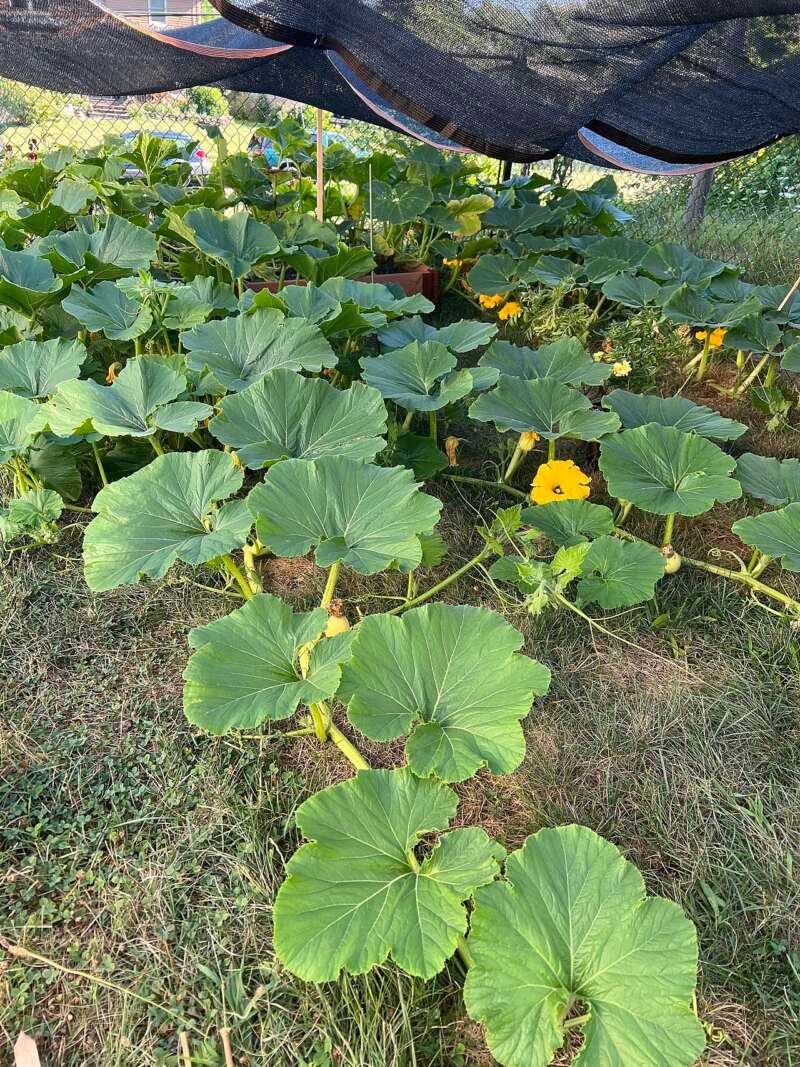
Giants need more. Illinois Extension says to plant jumbo types in early June and allow 150 square feet per hill. Utah State says at least 100. Mississippi State says to plant about 120 days before the show date.
Why do the first pumpkin flowers fall off?
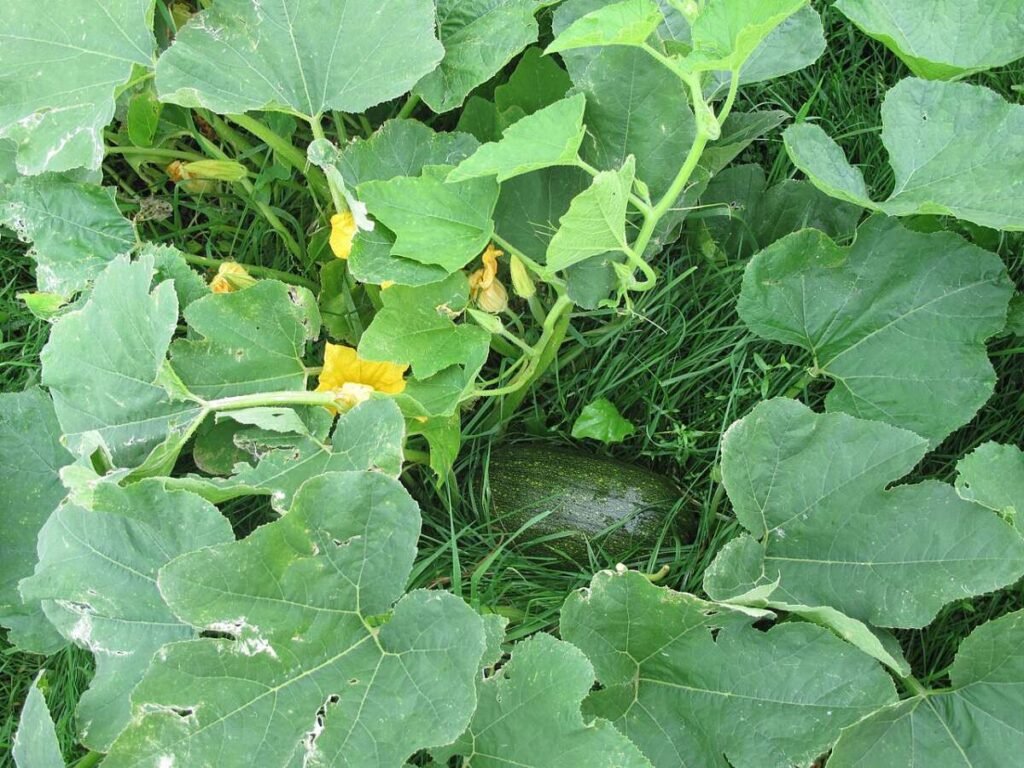
The first flowers are almost always male, and male flowers last one day. Illinois Extension says their pollen attracts bees and shows them where the vines are. Female flowers open later. You can spot one by the small swelling at its base, which becomes the fruit.
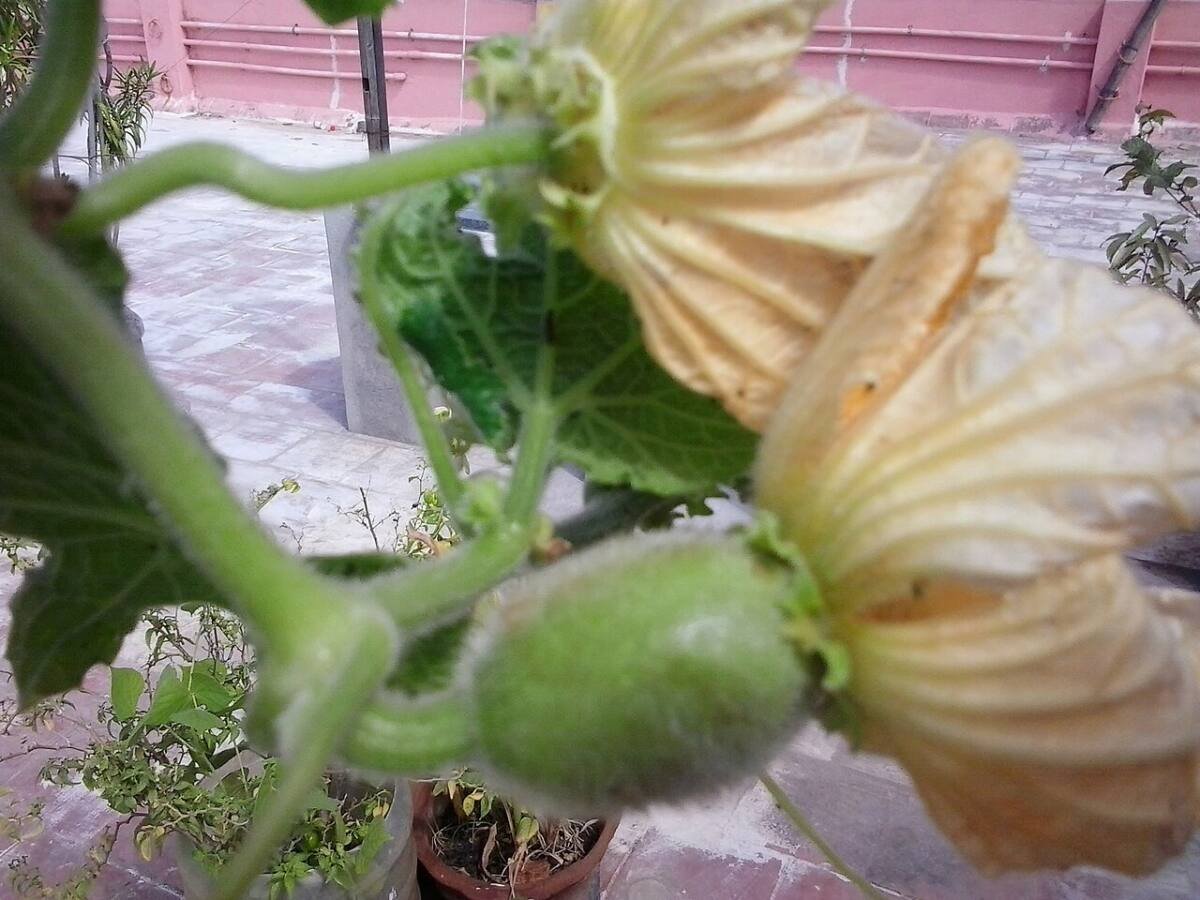
This ties back to the planting date. Minnesota says cold, rainy or cloudy weather can reduce pollination. A late sowing pushes flowering toward cooler weather, so it can make poor fruit set more likely. Bees are also easy to harm. Illinois Extension says to spray insecticide only in late afternoon or early evening, after the blossoms have closed for the day.
What is the latest date to plant pumpkins?
The latest date is your first hard freeze minus the days to maturity. University of Minnesota Extension says to pick pumpkins before a hard freeze, and West Virginia University Extension says the same. Minnesota adds that a light frost that kills the vine usually does not harm the fruit. A hard freeze does.
Illinois Extension says fruit that is not fully mature, or that has been injured or hit by heavy frost, does not keep. So a pumpkin from a late planting may look fine in October and still not keep.
If you are already past your date, choose a faster type. Trick or Treat is listed at 80 to 90 days by Mississippi State. Find your first frost date on the growing season length guide. The same count-back method for cool crops is in when to plant a fall garden.
When do you harvest and cure pumpkins?
Harvest when the color is deep and solid and the rind is hard. Utah State suggests pressing a fingernail into the skin. A ripe pumpkin resists. Cut the fruit from the vine with pruning shears or a sharp knife.
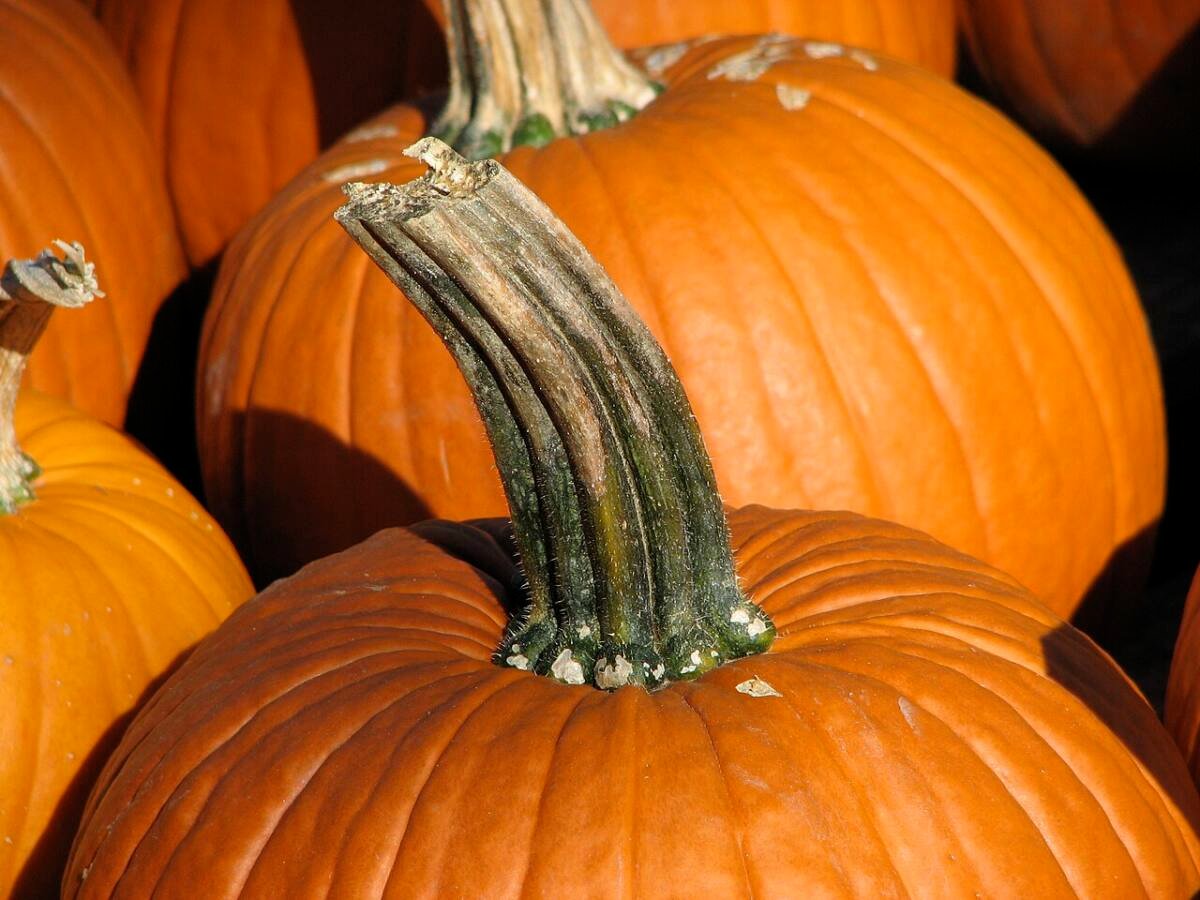
Leave 3 to 4 inches of stem. Illinois Extension says snapping stems off causes many broken or missing handles, and pumpkins without stems usually do not keep well. Wear gloves, since some stems have sharp prickles. Then cure the fruit. Minnesota says to leave cut pumpkins in the field for a week or two in dry, sunny weather. If the weather is cold or rainy, cure them indoors in a warm, ventilated space around 80°F.
For storage, four sources agree on about 50 to 55°F. Minnesota adds 50 to 75 percent humidity. Penn State says pumpkins keep good quality for about 2 to 3 months under those conditions.
What mistakes should you avoid?
- Sowing on the frost date. The soil may still be too cold. Arkansas says seedlings struggle below 65°F.
- Planting in May for Halloween in a warm state. Illinois Extension warns the fruit may rot before the holiday.
- Trusting one day-count. Munchkin is 100 days at Penn State and 85 to 95 at Mississippi State. Use your own packet.
- Mulching with straw too soon. Minnesota and Utah State both say to wait for 75°F soil.
- Spraying while blossoms are open. This harms the bees you need for fruit.
- Snapping the stem at harvest. A pumpkin without a handle rarely keeps.
- Leaving covers on through flowering. Utah State says to remove them when plants flower.
When can you skip parts of this plan?
If you live where the first freeze comes in late November or later, the count-back leaves a wide window. The soil rule becomes your only real limit. If you grow giants for a show, ignore the Halloween table. Count 120 days back from the weigh-in, as Mississippi State advises, and follow Illinois Extension’s extra feeding and flower-thinning steps for jumbo types.
If you grow pumpkins only for porch display and do not mind a few early soft spots, a broad window is fine. Just keep to the soil and frost rules above.
Pumpkin planting questions
What month should I plant pumpkins?
For Halloween, plant from late May to early July. Illinois Extension says late May in the north to early July in extremely southern sites. Mississippi State says early to mid-July. Your variety’s days to maturity set the exact date.
Is it too late to plant pumpkins in August?
For Halloween, usually yes. Sowing on August 1 and adding 90 days lands on October 30, with no time to cure the fruit. A warm state with a late first freeze and a fast type might still manage it. This is date math, not a claim from an extension source.
What soil temperature do pumpkin seeds need?
Most extension sources say at least 65°F. Penn State says 60°F at 3 inches deep, and Mississippi State says at least 70°F. Use 65°F as your default and 70°F if spring swings between warm and cold.
Should I start pumpkins indoors?
Only if your season is short. University of Minnesota Extension says seedlings need about four weeks to reach two or three true leaves. The University of Arkansas does not recommend transplanting because of the taproot.
How long do pumpkins take to grow?
Arkansas says 90 to 120 days and West Virginia says 90 to 110 days. Individual types run from about 80 to 120 days. Utah State says fruit take 45 to 55 days to mature after flowering.
When should I pick pumpkins?
When the color is deep and solid and the rind is hard, and before a hard freeze. Illinois Extension says to leave 3 to 4 inches of stem on the fruit.
Do pumpkins need bees?
Yes. Each plant has separate male and female flowers, and bees carry the pollen between them, according to Illinois Extension and West Virginia University Extension.
Sources
- Illinois Extension, Growing Pumpkins
- University of Minnesota Extension, Growing pumpkins and winter squash in home gardens (reviewed 2026)
- Utah State University Extension, How to Grow Pumpkins in Your Garden (February 2020)
- West Virginia University Extension, Growing Pumpkins
- University of Arkansas System Division of Agriculture, Mid-June: Plant pumpkins soon for Halloween arrival (June 3, 2020)
- Mississippi State University Extension, Growing Pumpkins for the Home Garden, Publication 2905 (2025)
- Penn State Extension, Pumpkin Production (updated June 20, 2005)
Where sources give different numbers, we say so in the text. Older pages, such as Penn State’s 2005 publication, may reflect older varieties and practices.
Image credits
- Featured image: Gilles Ayotte, CC BY-SA 4.0, Wikimedia Commons
- Pumpkin vine: TealTardigrade, CC BY-SA 4.0, Wikimedia Commons
- Male and female flowers: Mad.madrasi, CC BY-SA 3.0, Wikimedia Commons
- Pumpkin stem: Benjamin D. Esham, CC BY-SA 4.0, Wikimedia Commons
Published by Sajib Saha, a web developer and SEO specialist. This guide is compiled from the extension sources named above, not from personal horticultural credentials. See About and our editorial policy.