Published · Updated
Set peppers outside after the last frost, once nights stay above 50°F and the soil has warmed to near 70°F. University of Minnesota and West Virginia University Extension guides use the 50°F night rule, and the University of Georgia adds the soil mark. Arkansas Extension says to wait one week to 10 days after tomatoes.
Peppers are less forgiving of cold than tomatoes, which is why the sources tell you to plant them second. This guide turns four extension sources into a planting date you can trust. It includes a worked example, a go/no-go check, and the small steps that keep transplants growing. Growing cucumbers too? They want warmer soil than peppers do: see when to plant cucumbers outside.
Last verified: November 3, 2026. Sources are listed at the end.
Why isn’t the last frost date enough for peppers?
A last frost date tells you when freezing nights usually stop. It does not tell you when nights get warm enough for peppers. The date comes from weather records. NOAA’s National Centers for Environmental Information (NCEI) builds its “normals” as 30-year averages. The current set covers 1991 to 2020. A 50 percent last frost date means a frost came after that day in about half of those years.
Peppers need more than “no frost.” The University of Georgia says peppers do not tolerate frost or cool, wet soil. So the frost date opens the window, and temperature decides when you step through it. If frost dates are new to you, start with how to use frost dates without treating them as a forecast. For the difference between a light frost and a hard freeze, see frost vs freeze.
What night temperature is safe for pepper transplants?
Nights above 50°F are the common floor. The University of Minnesota Extension (guide reviewed in 2026) says to wait until night lows are above 50°F. West Virginia University Extension gives the same number. The University of Georgia (Circular 1005, reviewed in 2026) says nights should stay near 50°F. The University of Arkansas warns that plants may be hurt when nights are 50°F or lower.
Those numbers look close, but they ask different things. Fifty degrees is the line you must not cross. It is not the best temperature for growth. Minnesota and West Virginia both say nights below 60°F or above 70°F can weaken plants. Think of 50°F as the earliest safe night and 60 to 70°F as the range where peppers actually grow well.
| Source | Night temperature | Soil temperature |
|---|---|---|
| University of Minnesota Extension (2026) | Above 50°F; bring plants in if nights fall below 55°F while hardening off | Not given for transplanting |
| West Virginia University Extension (no date) | Above 50°F | Not given for transplanting |
| University of Georgia, Circular 1005 (2026 review) | About 50°F | 70°F |
| University of Arkansas, FSA6015 (revised about 2009) | Plants may be injured at 50°F or lower | “After the soil has warmed” (no number) |
What soil temperature do peppers need before planting?
Of the four main sources, only one gives a number. The University of Georgia says soil should reach 70°F before planting in the garden. Minnesota, West Virginia and Arkansas give no transplant soil number. They use night temperature, or just say the soil should be warm.
That is a real gap, and another source is lower. Ohio State University’s BYGL newsletter (Julie Crook, 2017) lists 55 to 60°F as the minimum soil temperature for tomatoes and peppers, and says to check at about 4 inches deep. So Ohio State gives a floor and Georgia gives a comfortable target. Treat 70°F as the goal, and 60°F as the lowest soil you should accept. Our tomato planting guide compares more of these numbers. Our page on soil temperature before planting explains why a warm afternoon can fool you.
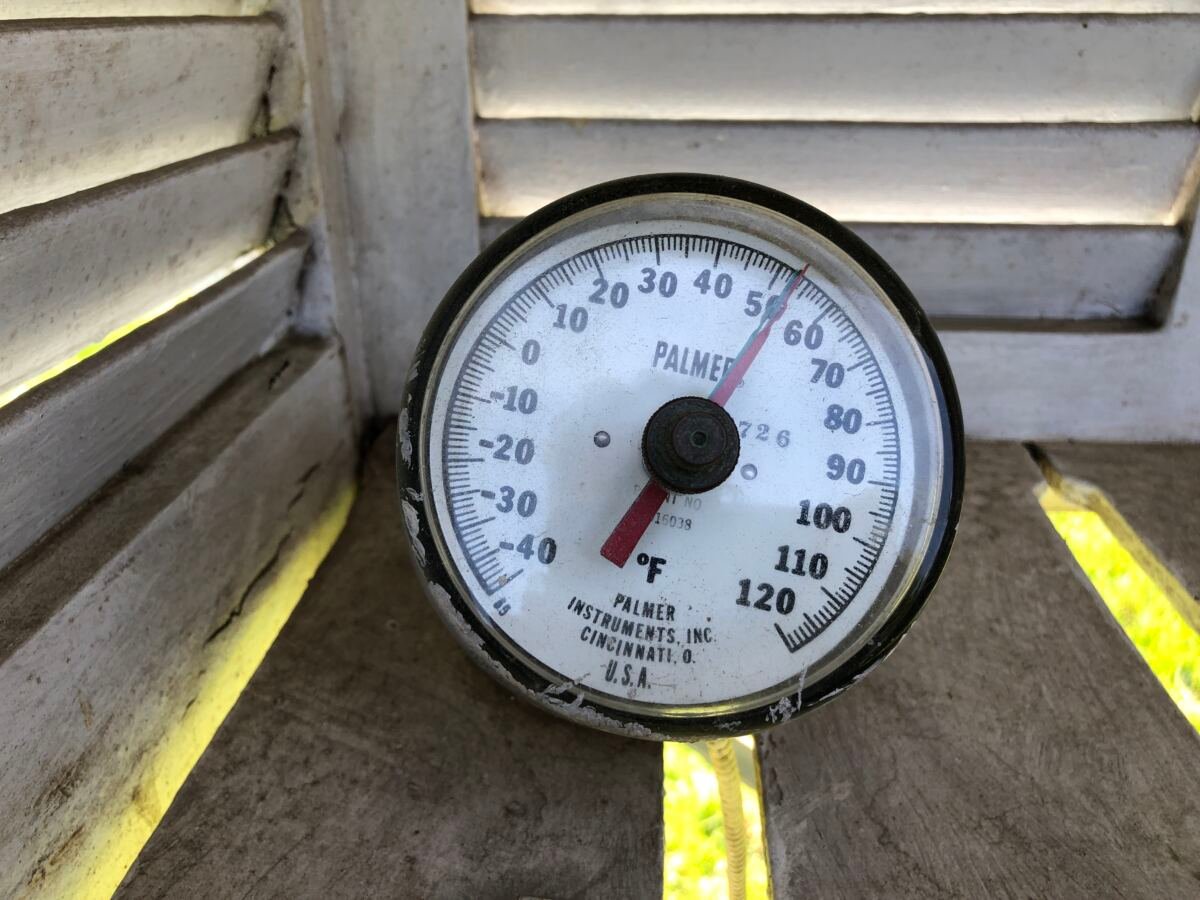
To use the number, push a thermometer in about 4 inches deep, the depth Ohio State suggests. Read it at the same time each morning for several days. One warm reading proves little. Three or four readings in a row near 70°F tell you the soil has really warmed.
How do I turn all this into an actual planting date?
Use the frost date to find the earliest possible week, then let the forecast and thermometer pick the day. Here is the order that fits the sources:
- Find your 50 percent last frost date. The GardenClock planting tools will show it for your area.
- Plan to plant tomatoes first. Arkansas Extension says to set peppers out one week to 10 days after tomatoes.
- Check the 10-day forecast. Every night low should be above 50°F, and a run of nights near 60°F is better.
- Check the soil. Aim for about 70°F at root depth.
- Pick a calm, cloudy day or the late afternoon. Minnesota and West Virginia both give this tip.
A worked example. The numbers below are made up to show the steps, not real station data. Say your 50 percent last frost date is May 1. You plant tomatoes on May 10. Arkansas’s rule puts the earliest pepper date between May 17 and May 20. Now the forecast: lows of 46, 49 and 52°F for the next three nights. Wait. Two nights fall under 50°F. Two weeks later the lows run 55 to 62°F and the soil reads 69°F. Go.
| Coldest night in the 10-day forecast | Soil at root depth | Call |
|---|---|---|
| Below 50°F | Any | Wait. Keep hardening off. |
| 50 to 55°F | Below about 65°F | Wait a few more days, or cover plants on cold nights. |
| 55°F or higher | 65°F or higher, ideally near 70°F | Plant. |
The middle row is our own judgment, built from the sources, not a published rule. The 65°F figure sits between Ohio State’s 55 to 60°F floor and Georgia’s 70°F.
One real regional date helps show the spread. Iowa State University Extension (updated October 2024) says central Iowa gardeners can plant peppers in mid-May. Southern Iowa is about a week earlier and northern Iowa about a week later. Iowa State calls June 20 the last practical date. Those dates are for Iowa. Your own frost date and weather will shift them.
How should I harden off pepper seedlings?
Hardening off means getting indoor plants used to wind, sun and cooler air. Minnesota’s method is simple. Put plants outside, sheltered from wind, for a couple of hours of sun. Add more sun over the next week or two. Bring them back in if nights fall below 55°F.
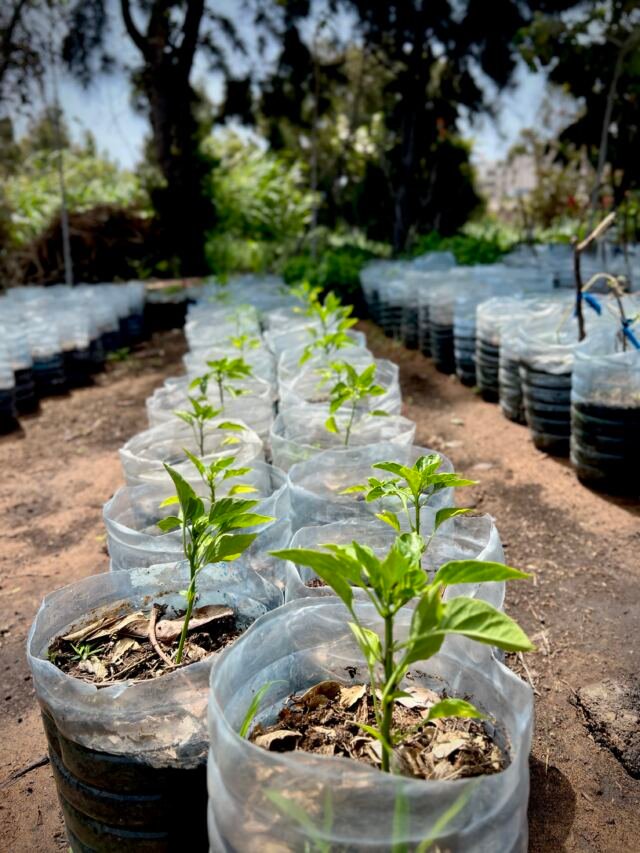
Two more details come from the same guides. Arkansas says to transplant when plants are 4 to 5 inches tall. Minnesota and West Virginia say to pinch off flower clusters before planting, even on store-bought plants. That lets the plant put its energy into roots and leaves first. If you start your own seed, Minnesota and West Virginia say about eight weeks before the planting date. Georgia says 6 to 8 weeks. Our guides on when to start seeds indoors and planning seed starting backward from transplanting walk through the counting, and the seed starting calculator does the math.
Can black plastic mulch let me plant peppers earlier?
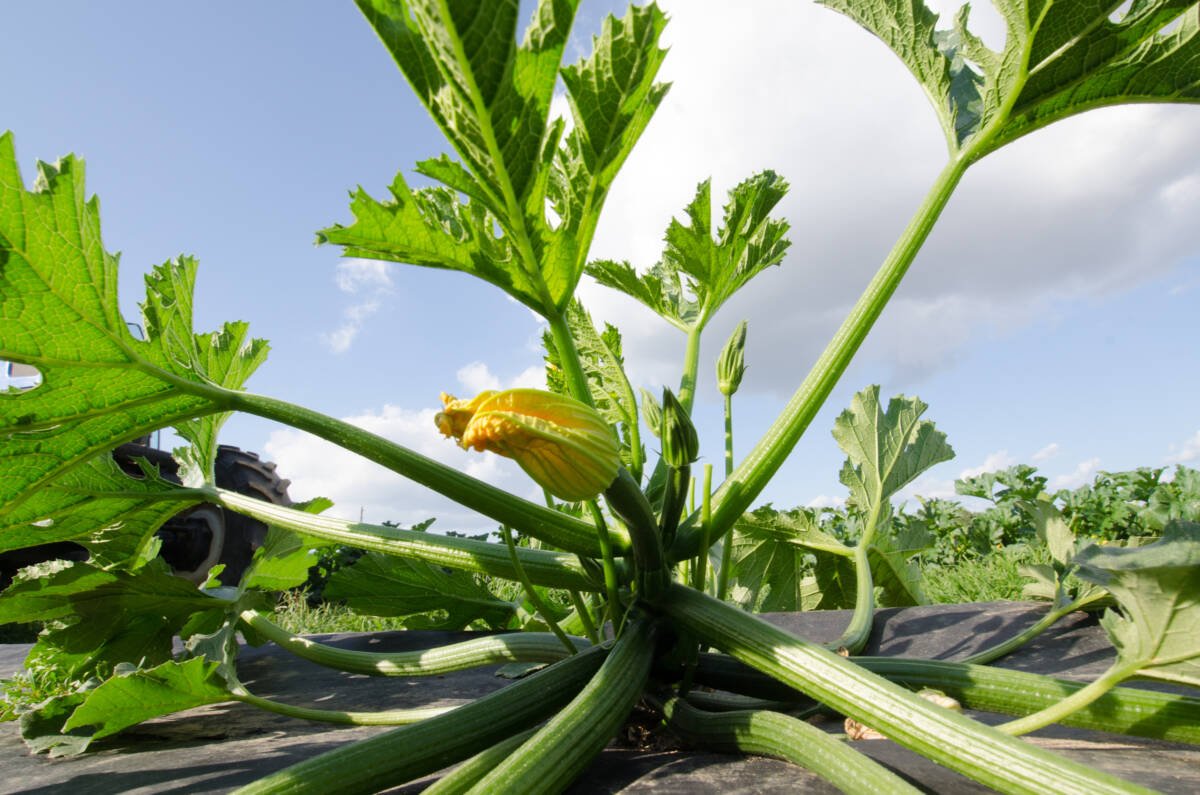
It can warm the soil, but it does not warm the air. West Virginia University Extension says black plastic mulch warms the soil, reduces weeds and limits moisture loss. None of the guides say it lets you plant before nights are safe. A cold night still hits the leaves above the plastic.
So use mulch to speed up the soil, not to skip the night-temperature check. Lay it before planting day so the bed has time to heat up.
What if the weather turns hot after planting?
Heat is the second risk. Minnesota says daytime highs above 90°F can weaken peppers, and so can nights above 70°F. Arkansas says blossoms drop when nights are above 75°F. West Virginia adds that watering too much or too little can also make flowers drop.
That is why planting very late is not a fix for a missed window. In a hot climate, a sensible move is to plant as soon as the cold risk is gone, before summer heat peaks. Water on a steady schedule instead of in bursts.
What mistakes cost gardeners the most time?
- Planting on the frost date alone. The date says frost is unlikely. It says nothing about 45°F nights.
- Buying early and planting the same day. Garden centers often sell peppers before it is safe to plant them. Keep them in a bright, sheltered spot and harden them off first.
- Trusting one warm afternoon. Check nights and morning soil, not the daytime high.
- Setting plants into cold, wet soil. Georgia warns that peppers do not tolerate it.
- Ignoring your own yard. A low corner and a sheltered wall can have very different nights. See garden microclimates for how to spot them.
Skip the extra wait if your nights have already run above 60°F for a week and the soil is near 70°F. In that case the tomato rule is only a guide, and the thermometer matters more.
Frequently asked questions
How long after the last frost can I plant peppers?
The extension guides read for this article do not give a fixed number of weeks. Arkansas Extension says one week to 10 days after tomatoes, and Minnesota and West Virginia say wait for night lows above 50°F.
Can pepper plants survive 45°F nights?
They may survive, but they can be hurt. The University of Arkansas says peppers may be injured when nights are 50°F or lower, and the University of Georgia says they do not tolerate frost or cool, wet soil.
Should I plant peppers and tomatoes on the same day?
Plant tomatoes first. Arkansas Extension says to set peppers out one week to 10 days after tomatoes.
What is the last date to plant peppers?
It depends on where you live. Iowa State University Extension calls about June 20 the last practical date for peppers in Iowa. Use your first fall frost date and the days to harvest on your seed packet to work out yours.
How far apart should I plant peppers?
The sources give a range. West Virginia says 15 to 18 inches, Minnesota says 18 inches, Arkansas says 18 to 24 inches, and Georgia says 12 to 24 inches.
How tall should pepper seedlings be before planting?
The University of Arkansas says 4 to 5 inches tall.
Sources
- University of Minnesota Extension, Growing peppers in home gardens (Schuh and Tong, reviewed 2026).
- West Virginia University Extension, Growing peppers in West Virginia (Jett and Brabham, undated).
- University of Georgia Extension, Home Garden Peppers, Circular 1005 (Westerfield, reviewed August 2026).
- University of Arkansas System Division of Agriculture, Peppers, FSA6015 (Andersen, revised about 2009).
- Iowa State University Extension and Outreach, When can I plant peppers in my garden? (updated October 16, 2024).
- Ohio State University BYGL, Is it Time to Plant Tomatoes? Check the Soil Temperature! (Julie Crook, April 28, 2017).
- NOAA National Centers for Environmental Information, U.S. Climate Normals (1991 to 2020).
Frost dates on this site come from the sources listed on our data sources page. Sources differ in age and region, so check your local extension office.
Image credits
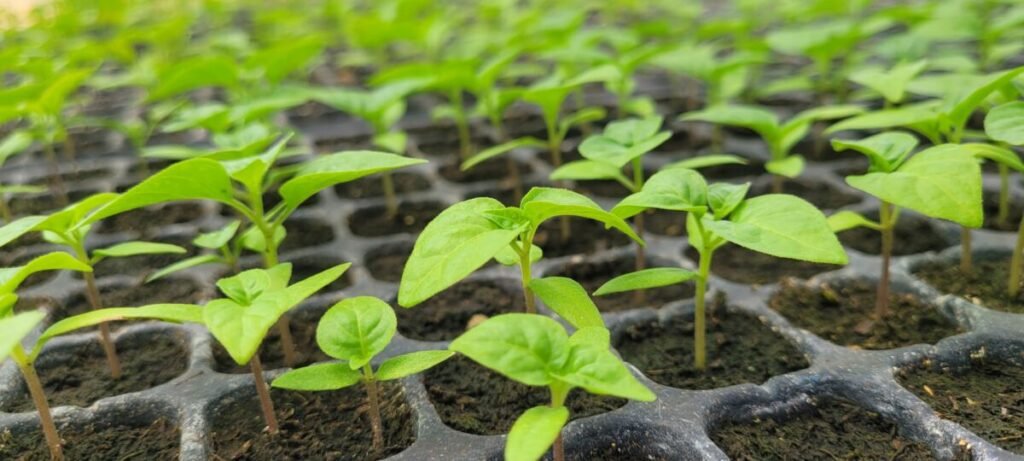
- Featured image: “Sweet pepper seedlings,” Pascal Kings, CC BY 4.0, via Wikimedia Commons. Resized and compressed.
- Soil thermometer: Famartin, CC BY-SA 4.0. Resized and compressed.
- Plastic mulch rows: USDA, public domain. Resized and compressed.
- Bell pepper plant: Wuzyprod, CC BY-SA 4.0. Resized and compressed.