Published · Updated
Frost is ice that forms on leaves and other surfaces, and it can appear while the air is still in the mid-30s °F. A freeze means the air itself has dropped to 32°F or lower. A hard freeze, usually 28°F or lower for an extended stretch, kills tender crops outright, while frost often only scorches the foliage.
Those three words get used interchangeably in forecasts, seed packets and garden forums, and the mix-up costs people tomato plants. This page sorts out the terms, shows how the National Weather Service uses them, and gives you a practical way to decide what to cover, what to pick and what to leave alone. Last verified against the sources below on October 22, 2026.
What frost actually is, and why the forecast low can mislead
Frost is a thin layer of ice crystals on a surface. It forms when a leaf, a car roof or a patch of soil cools to freezing, even if a thermometer in the air nearby still reads above 32°F. The University of Georgia notes that frost needs two things: a surface at or below freezing, and enough humidity for ice to form. In very dry air it may not form at all.
The catch is where the forecast number comes from. The National Weather Service forecasts temperature at about 2 meters, roughly 6 feet up. On a clear, calm night, the air at ground level is often colder than that, and raised surfaces frost first. So a forecast low of 35°F does not guarantee your seedlings stay above freezing. Plants sit in the cold layer the forecast does not describe.
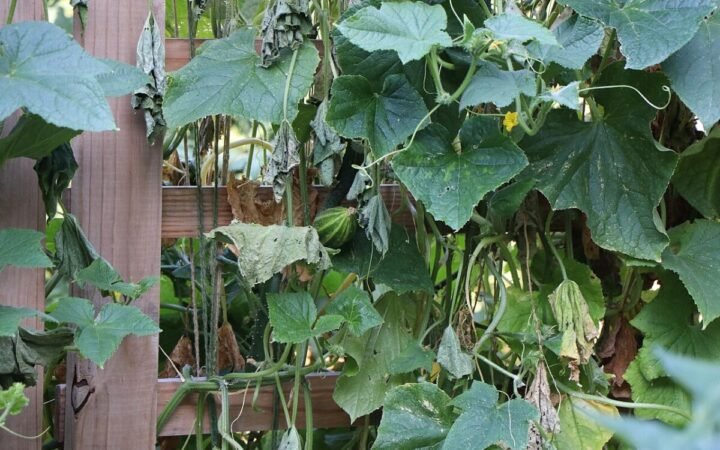
Frost damage is usually modest because the ice sits mostly on the outside of the plant.
Freeze, hard freeze and killing freeze: the temperature lines
A freeze is any time the air temperature reaches 32°F or below. A hard freeze is a deeper one, commonly defined as 28°F or lower, and “killing freeze” is the usual gardener’s name for the same event. The NOAA-based probability tables that frost date tools rely on use the same 32°F and 28°F lines, and add 36°F as the frost line.
| Term | Typical threshold | What it usually does |
|---|---|---|
| Frost | Air about 33 to 36°F (NWS advisory range); NC State says frost typically occurs at 31 to 33°F | Surface ice; limited damage to hardy plants, can scorch or kill tender ones |
| Freeze | 32°F or lower | Damage depends on how long it lasts and how cold-sensitive the plant is |
| Hard or killing freeze | 28°F or lower (NC State gives a range of roughly 26 to 31°F) | Kills most tender plants; hardy crops can survive for a limited time |
Notice the ranges overlap. That is not sloppy editing. Different offices and extension services draw the lines slightly differently, and duration matters as much as the number. The University of Georgia says a brief dip to 32°F is likely to cause minimal harm, while a longer freeze lets water inside cells freeze and expand, which ruptures cell walls and causes damage that cannot be reversed.
How the National Weather Service words its alerts
Three alert types matter to gardeners, and they map neatly onto the terms above.
- Frost advisory: issued when conditions favor temperatures dropping to between 33 and 36°F, with possible widespread frost near the surface. Unprotected vegetation may be damaged.
- Freeze watch: conditions favor temperatures below 32°F, which could significantly damage unprotected vegetation. It is a heads-up, not a certainty.
- Freeze warning: issued when confidence is high that temperatures will fall below 32°F, with significant damage possible to unprotected vegetation.
The lead times differ by source. One NWS office page describes a freeze watch as covering the next 12 to 48 hours and a freeze warning as covering the next 24 hours, while the national cold-weather page says a watch covers the next 24 to 36 hours. Offices also set their own season: one office’s fall page says frost and freeze products stop for the season starting October 16. If your local office has gone quiet for the year, that is not a promise that cold nights are over, so keep watching the forecast low yourself.
Advective and radiative nights behave differently
Two freezes with the same forecast low can be very different events. The University of Georgia illustrated this with two March 2023 nights. On the first, cold air moved into the state from the northwest, which is an advective freeze. On the second, skies were clear, winds calm and the air dry, so the ground radiated its heat out to space overnight, a radiative freeze.
For a gardener the practical split looks like this. An incoming cold air mass is cold across the whole yard. On a still, clear night, small local differences count for more, such as a sheltered wall versus an open bed or a low spot versus a slope. Cold air also pools in low areas, which is why Nebraska Extension suggests protecting warm-season plants in low spots first.
Which crops die at which temperature
Crops fall into three loose groups. Two extension services publish their lists, and they agree on the tender group and disagree on some of the details.
| Group | Nebraska Extension (Lancaster County) | NC State Extension (Buncombe County) |
|---|---|---|
| Tender / warm-season | Injured or killed at 28 to 32°F: snap and lima beans, cucumber, eggplant, melons, okra, pepper, pumpkin, summer and winter squash, sweet corn, tomato, sweet potato, watermelon | Damaged or killed at about 31 to 33°F: beans, corn, cantaloupe, cucumbers, eggplant, okra, peppers, potatoes, squash, tomatoes, watermelon, sweet potatoes |
| Frost tolerant / cool-season | Light frost, 28 to 32°F, without injury: beet, broccoli, Brussels sprout, cabbage, carrot, cauliflower, celery, chard, onion, radish | Hard frost, 26 to 31°F, for a limited time, with likely foliage damage: broccoli, cabbage, cauliflower, chard, peas, lettuce, mustard, onion, radishes, turnips |
| Hardiest | Brief hard frost below 28°F: kale, collards, spinach, lettuce, peas, turnip, rutabaga, mustard | Below 26°F: Brussels sprouts, beets, collards, kale, parsley, spinach |
The lists clash in a few places. Nebraska puts lettuce and peas in its hardiest group, while North Carolina puts them one tier lower. Beets are “frost tolerant” in one and among the hardiest in the other. Potatoes are very hardy in Nebraska’s list and warm-season in North Carolina’s. The sources do not explain the differences, and regional growing conditions and variety choice could play a part, though that is a guess. The safe reading is to trust the tender group, treat everything else as “probably fine, check the forecast,” and keep your own notes on what survived in your yard. For potatoes, emerged tops are the part to protect if a freeze is forecast.
If you start your own plants, the schedule in When to Start Seeds Indoors and the backward-planning method in Plan Indoor Seed Starting Backward from Transplanting are built around keeping transplants out of the cold layer.
A worked example: reading two forecasts
These numbers are invented to show the reasoning, not taken from a real night.
Night one: forecast low 34°F, clear sky, no wind. That sits inside the 33 to 36°F range where the Weather Service issues frost advisories. The forecast describes air at about 6 feet, and a clear, calm night is exactly the kind where ground-level air runs colder. Treat it as a probable frost, possibly a light freeze at plant height. Tomatoes, peppers, basil and squash get covered. Kale, spinach and cabbage stay as they are.
Night two: forecast low 29°F, expected to stay below freezing for several hours. Now you are one degree from the hard freeze line. Tender crops that are still bearing are worth harvesting rather than covering. Cool-season crops in the NC State “hard frost” group will probably survive with some leaf damage, and the hardiest group should be fine. Fruit on a plant that will not survive is better in the kitchen than frozen on the vine.
If the low is forecast at 40°F or above, with clouds, you can skip all of it. That is a judgment call, not a sourced rule, but nothing in the frost advisory range reaches that high.
What to do before a frost or freeze night
Work from the most vulnerable plants down, and keep it proportional to what you stand to lose.
- Harvest what will not survive. Nebraska Extension suggests picking green tomatoes before frost and ripening them indoors at 50 to 55°F over several weeks; peppers blacken and rot after frost; summer squash deteriorates quickly. Winter squash and pumpkins meant for storage should come in too.
- Cover what you want to keep. Straw, newspaper or sheets work over low plants such as cucumbers; paper sacks or plastic bags work over caged tomatoes, peppers and eggplant, according to Nebraska Extension. Row covers come in different weights for different levels of protection (NC State).
- Water dry soil. NC State says moist soil holds heat and releases it slowly. Do not till right before the cold night, since that opens the soil to colder air.
- Remove covers the next morning. Plastic especially can overheat plants once the sun is up. NC State also advises watching temperatures under row covers.
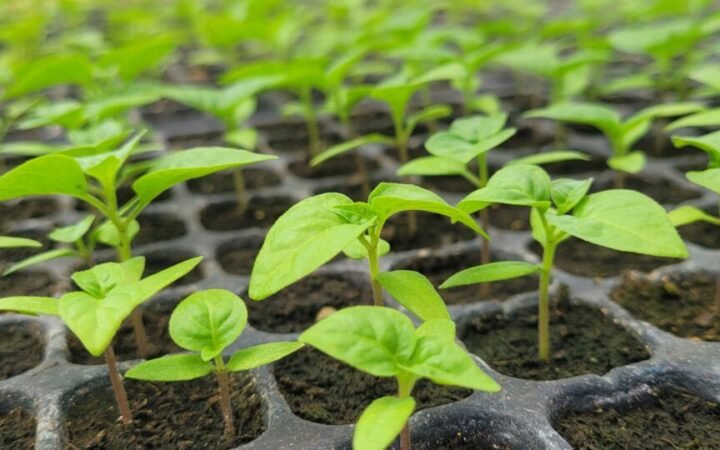
- Delay the most sensitive transplants. If tomatoes and peppers are not yet in the ground and a cold snap is in the forecast, wait. In an extreme case NC State describes lifting recent transplants, sheltering them and replanting afterward, with care for the roots.
Cole crops such as broccoli, cabbage and cauliflower tolerate frost well, so there is no need to rush covering or harvesting them unless a hard freeze is expected.
How frost and freeze connect to your frost dates
A “last frost date” is really a statistic about one of these thresholds. Climate.gov defines the last spring freeze as the date after which temperatures stay above 32°F for the rest of the season, and its map shows the average date when the chance of a freeze drops below 50 percent. The 1991-2020 U.S. Climate Normals from NOAA’s National Centers for Environmental Information also give the dates when that chance falls below 40, 30, 20 and 10 percent, and Climate.gov suggests the 10 percent date for cautious jobs such as moving tomato seedlings outdoors.
The NCEI tables cover more than one line. NC State’s explainer says they run from 36°F down to 16°F in 4°F steps, and that a 10 percent level means the condition is expected in 1 year out of 10. For spring and fall freeze dates, the 10 percent date suits a risk-averse gardener, 50 percent is moderate, and 90 percent suits someone willing to gamble. The NC State page was built on the 1981-2010 period, so its numbers will differ from tools that use 1991-2020. That mismatch is a common reason two frost date sources disagree. Your hardiness zone is a separate number built from winter lows, which we compare in frost date vs hardiness zone.
So when a tool says “last frost April 20,” the first question is which threshold, which probability and which years it used. How to Use Frost Dates Without Treating Them as a Forecast walks through that check. You can look up your own station on the frost date lookup, and our data sources page explains where those numbers come from. Ground temperature is a separate question from air temperature, and Why Soil Temperature Matters More Than a Warm Afternoon covers it.
Common mistakes
- Treating 32°F as a cliff. Duration and plant type matter. A short dip is not the same as eight hours below freezing.
- Trusting the forecast number for the ground. The forecast is for about 6 feet up, and clear nights run colder near the soil.
- Covering with plastic and leaving it on. Take it off in the morning.
- Protecting everything equally. Cabbage and kale rarely need the effort that tomatoes do.
- Assuming the season is over after one frost. A first light frost can be followed by warmer weeks, so check what is forecast before pulling beds.
- Planting on a date alone. A frost date is an average, not a forecast.
Frequently asked questions
What temperature is a frost?
Frost can form when the air is in the low to mid 30s °F, because surfaces such as leaves cool faster than the air around them. The National Weather Service issues a frost advisory when temperatures are expected to fall between 33 and 36°F. NC State Extension says frost typically occurs at 31 to 33°F.
Is a frost the same as a freeze?
No. Frost is ice forming on surfaces and can happen while the air is still above 32°F. A freeze means the air temperature itself reaches 32°F or lower. Frost often causes limited damage, while a longer freeze can freeze the water inside plant cells.
Will 32°F kill my tomatoes?
Possibly. Nebraska and North Carolina extension sources both list tomatoes as tender, meaning frost-range temperatures of roughly 28 to 33°F can injure or kill them. A brief dip to 32°F is likely to do minimal damage, according to the University of Georgia, but a longer freeze is much riskier. Cover them or pick the fruit.
What is a killing freeze?
A killing freeze, also called a hard freeze, is usually 28°F or lower. The National Weather Service says temperatures below 28°F for an extended period can kill most commercial crops and residential plants. Hardy crops such as kale and spinach can often survive it.
Does a frost advisory mean I have to cover my plants?
Only the tender ones. A frost advisory warns that unprotected vegetation may be damaged. Tomatoes, peppers, squash, cucumbers and beans need cover or harvesting. Cool-season crops such as cabbage, broccoli and kale usually do not need rushing under cover for a light frost.
Should I water the garden before a freeze?
Yes, if the soil is dry. NC State Extension advises keeping soil moist before a cold event because water holds heat and releases it slowly. It also advises against tilling just before a frost, since that can open the soil to colder air.
Why did my garden freeze when the forecast low was above 32°F?
Forecasts describe air about 6 feet (2 meters) above the ground. On clear, calm nights the air near the ground is often colder, so a garden can drop below the forecast number. Elevated surfaces also frost more easily, according to the University of Georgia.
The first killing frost also sets the clock for fall jobs. See when to plant garlic for how extension services use it.
\n\nSources
All pages opened and read on October 22, 2026. Gardening outcomes vary by site; see our gardening disclaimer and editorial policy.
- National Weather Service, Fall Frost/Freeze page (frost advisory, freeze watch and warning wording, 28°F hard freeze table)
- National Weather Service, Cold weather watches and warnings
- NOAA Climate.gov, Last spring freeze (1991-2020 U.S. Climate Normals)
- NC State Extension, Interpreting freeze/frost probabilities from NCEI
- University of Georgia, Frost and freeze: what is the difference?
- University of Nebraska-Lincoln Extension in Lancaster County, Frost
- NC State Extension, Buncombe County, Frost and freeze protection for vegetables