Published
Plant sweet potato slips after your last spring frost, once the soil is at least 65°F and nights stay above 55°F. The Old Farmer’s Almanac recommends planting three to four weeks after the last frost. Then check that your variety’s 90 to 120 days fit before your first fall frost.
Sweet potatoes come from the tropics. They stall in cold ground, and they need months of warmth to fill out their roots. That gives you two gates. One opens in spring, when the soil and nights are warm enough to start. The other closes in fall, when the days run out. This guide compares five university extension sources, shows where they disagree, and works through the date math. The dates in the examples are made up, so swap in your own.
Last verified: November 20, 2026. Sources are listed at the end.
When is it safe to plant sweet potatoes outside?
It is safe when frost is over, the soil has warmed, and nights are mild. South Dakota State University (SDSU) Extension says to wait until all danger of frost has passed and the soil, 4 inches down, is at least 65°F. It also says temperatures below 50°F can damage the plants.
Your last frost date is the usual date of the final spring frost where you live. It is an average, not a promise. How to use frost dates without treating them as a forecast explains the idea, and you can look up your own date on the frost dates page. Sweet potato sits at the tender end of the scale, far from hardy crops such as peas. The chart in frost tolerance of vegetables shows the gap. The University of Missouri adds that the plant is hurt by chilling, meaning cold between 32°F and 60°F, and that it dies in a freeze.
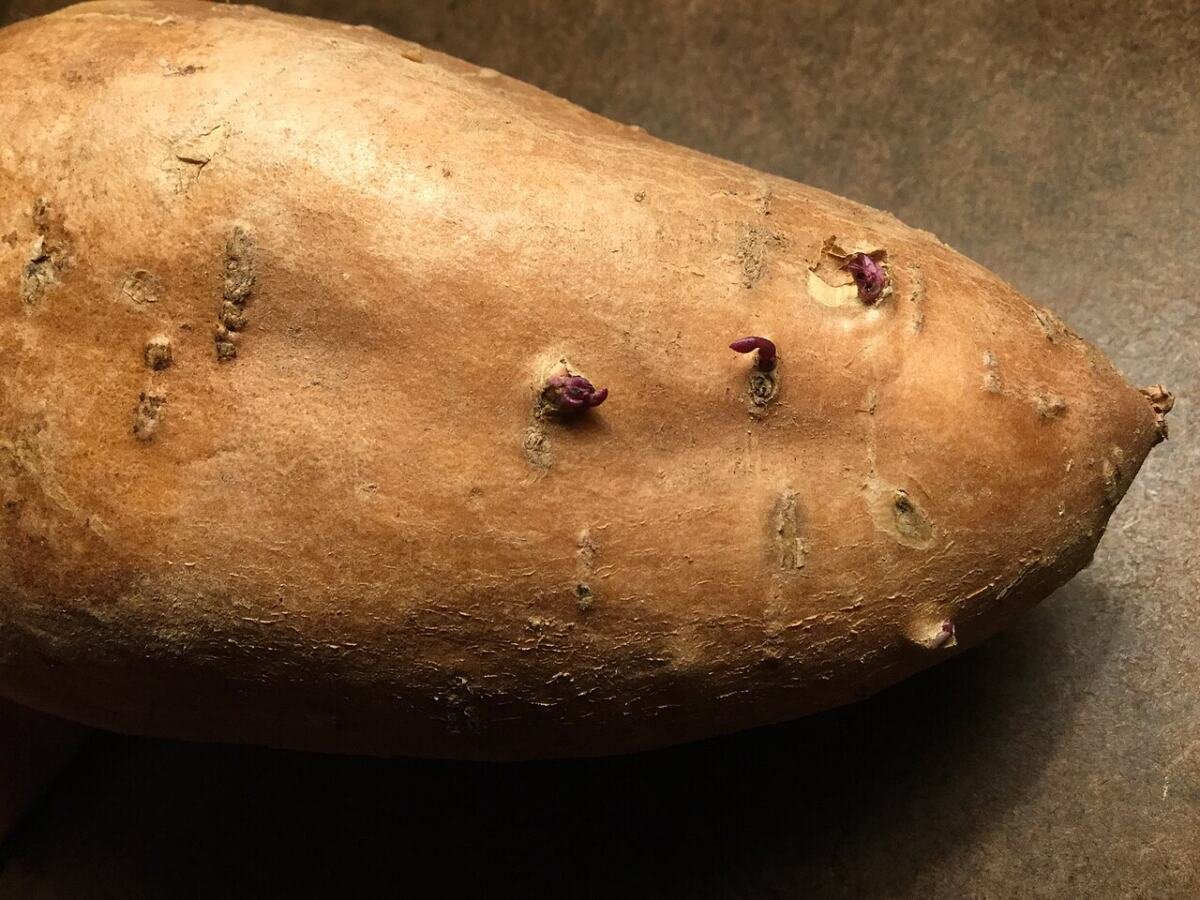
A quick word on terms. Sweet potatoes are not grown from seed. They grow from slips, which are rooted shoots taken from a sprouted sweet potato. The part you eat is a storage root, a swollen root that stores food for the plant. SDSU Extension notes that it is a true root, not a tuber like a regular potato.
What soil temperature do sweet potatoes need?
Most sources say 65°F, measured a few inches down. Here is what each one says.
| Source | Soil rule for planting |
|---|---|
| SDSU Extension (updated Sept. 2025) | At least 65°F at 4 inches deep, and no danger of frost left. |
| University of Missouri (2023) | Above 65°F, and the risk of freezing has passed. |
| Clemson Extension (updated 2022) | Above 65°F, and well after the last chance of frost. |
| Mississippi State Extension (2022) | No number. Plant after the soil has warmed and all danger of spring frost has passed. |
| University of Arkansas (2009) | Above 60°F once frost danger is past. Says plants cannot take long spells below 55°F in spring. |
| Old Farmer’s Almanac (Oct. 2026) | At least 65°F, with nights at least 55°F. One later step on the same page says 60°F. |
| Harvest to Table (Nov. 2025) | 70°F at 4 inches deep. |
The numbers differ for a few likely reasons. The Arkansas page is from 2009 and was written for a state with a long, warm season. Harvest to Table is a garden site, not an extension service, and its 70°F is the point where it says slips grow right away. Those are our readings of the gap, not statements from the sources.
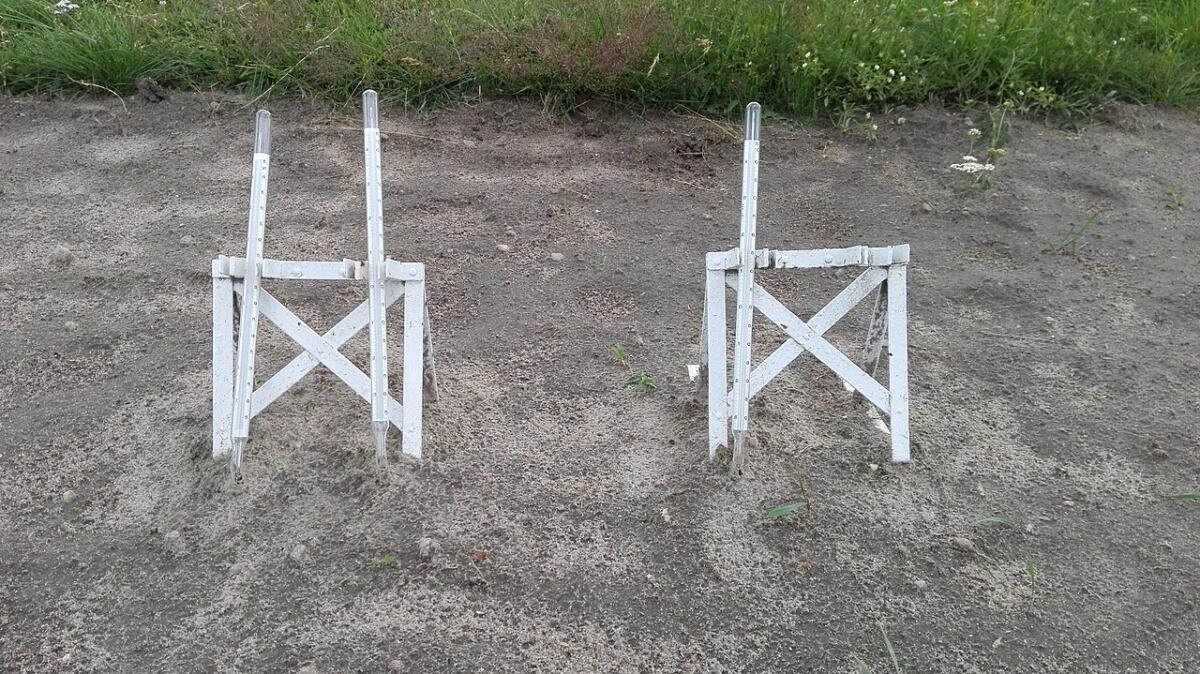
A safe rule: use 65°F as your default. Wait for 70°F if your spring swings between warm days and cold nights, or if the bed is wet and heavy. Mississippi State Extension says soil that drains poorly can mean lower yields and rotten roots. Check with a soil thermometer, a few inches down, in the morning, on several days in a row. Why soil temperature matters more than a warm afternoon covers the method.
How long after the last frost should you wait?
The Old Farmer’s Almanac gives the one clear rule: plant 3 to 4 weeks after your last spring frost, or once the soil is at least 65°F, with nights at least 55°F. The other sources say only to plant well after the last frost. Clemson Extension, for one, says not to plant until well after the last chance of frost.
So treat it as two gates, and plant when both are open. Here is the order to follow.
- Find your last frost date. For a tender crop, lean toward the later, safer date. Frost date probabilities explained shows what the 10%, 50% and 90% dates mean.
- Add three weeks. If your last frost is May 10, three to four weeks later is May 31 to June 7.
- Test the soil. Look for 65°F at 4 inches on several mornings. If the reading is 58°F on June 1, wait.
- Check the nights. The Almanac says to cover young plants with plastic milk jugs or row covers on nights below 55°F, and to take the covers off by day. How to protect plants from frost compares the options.
- Harden off the slips. The Almanac says to give them 1 to 2 weeks in filtered sun outdoors first. See how to harden off seedlings.
SDSU Extension adds a small tip: plant on a cloudy day or in the evening to ease stress on the slips.
How do you find your latest safe planting date?
Count back from your first fall frost. The number you subtract is the days to maturity, the days from planting to harvest. Mississippi State Extension says most sweet potato types take 90 to 120 days.
- Find your first fall frost date on the frost dates page.
- Subtract the days to maturity listed for your variety.
- Take off one or two more weeks as a cushion. That is our advice, because a cool summer slows the crop.
- Compare the answer with your spring gates. If the latest date comes before the earliest, pick a faster variety.
Here are two made-up gardeners.
| Detail | Gardener A | Gardener B |
|---|---|---|
| Last spring frost | May 10 | May 25 |
| First fall frost | Oct. 5 | Sept. 25 |
| Days between the two frosts | 148 | 123 |
| Planting date (3 to 4 weeks after last frost) | June 7 | June 15 |
| 90-day type is ready | Sept. 5 (30 days to spare) | Sept. 13 (12 days to spare) |
| 120-day type is ready | Oct. 5 (no days to spare) | Oct. 13 (18 days after frost) |
Gardener A can grow almost any type, though a 120-day type leaves no room for a cool summer. Gardener B cannot grow a 120-day type at all. Even a type listed at 90 to 100 days could run to September 23 if it takes the full 100, only two days before the frost. B needs a fast type and the earliest planting date that both gates allow. SDSU Extension suggests Beauregard, Georgia Jet or Centennial for its short season, all listed at 90 to 100 days.
Do not treat the latest date as a target. A University of Missouri study planted sweet potatoes four times, about a week apart, starting in the last week of May. Every plot was dug on the same day at the end of September. Average marketable yield per 100 feet of row fell from 518 pounds for the earliest planting to 405, 334 and 284 pounds for the later ones. By our arithmetic, the last planting made about 45 percent less than the first. The University of Arkansas also calls early planting the most important single factor for high yields. Plant as soon as both spring gates open, not on the last safe day.

What do planting dates look like in different states?
Extension dates run from mid-April in the South to June in the north. Use them as a sanity check, not a rule. Your frost date and your soil reading matter more than the calendar.
| Source | Planting window |
|---|---|
| University of Arkansas (2009) | South: Apr. 15 to May 15. Central: Apr. 20 to May 20. North: May 1 to May 20. |
| Clemson Extension, South Carolina (2022) | Coastal: Apr. 15 to June 15. Piedmont: May 1 to June 15. |
| Mississippi State Extension (2022) | Early May through June. |
| SDSU Extension, South Dakota (2025) | Its planting chart shows June, with harvest in September and October. |
| University of Missouri study (2023) | First planting in the last week of May. These are study dates, not advice. |
The windows differ because climates differ. To see how long your own season runs, read how long your growing season is. Skip this table if you have already worked out your window from your frost dates and soil readings.
When should you start slips indoors?
Slips take 6 to 8 weeks to grow. The Almanac says slips are 6 to 12 inches long after about 6 to 8 weeks, and Mississippi State says to start eight weeks before you plan to plant. Keep the bed or room at 75°F to 80°F, says the Almanac. Mississippi State says 75°F to 85°F.
Here is a trap. SDSU Extension and the Almanac both say to start slips about 8 weeks before the last frost. But if you plant 3 to 4 weeks after the last frost, those slips are 11 to 12 weeks old on planting day. The Almanac allows for this: it says to stand ready slips in moist potting mix or sand until planting time. If you would rather not hold them, count 8 weeks back from your planting date instead, which is how Mississippi State words it.
Start from organic sweet potatoes or roots saved from your own harvest. SDSU and Clemson both say grocery store roots are often treated to stop sprouting. If you buy slips by mail, the Almanac says to unpack them right away and stand the roots in water for a day. Time the order for your planting date. The general method is in plan indoor seed starting backward from transplanting.
Which varieties fit a short season?
Beauregard and a few others are the usual picks for short seasons. The listed days to maturity vary by source, so plan with the high end of each range.
| Type | Mississippi State | Clemson | Arkansas | Almanac |
|---|---|---|---|---|
| Beauregard | 90 to 100 | 90 to 100 | 90 | 90 |
| Centennial | 90 to 100 | 100 to 110 | 95 | 100 |
| Covington | 110 to 120 | 95 to 110 | 100 | Not listed |
| Jewel | 110 to 120 | 120 to 135 | 105 | 120 |
Mississippi State also lists Okinawan, a purple type, at 110 to 130 days. The gaps come from different growing areas and different ways of counting, so one listing is not wrong and another right. If your season is tight, SDSU Extension says bush types such as Vardaman or Porto Rico are an option when sprawling vines are a worry.
How deep and how far apart do you plant slips?
Set slips 4 to 6 inches deep with several nodes underground, about 12 inches apart. A node is the bump on a stem where leaves and roots form. SDSU Extension puts rows 36 to 40 inches apart. Mississippi State says 4 to 5 inches deep, 9 to 15 inches apart, rows 3 to 4 feet apart. Clemson says 3 to 4 inches deep and 8 to 12 inches apart.
Plant on ridges if you can. SDSU says ridges 8 to 12 inches high and 12 inches wide help the soil warm faster, drain better and make digging easier. Mississippi State says wider spacing in the row often gives an earlier harvest or larger roots. Water right after planting and keep the soil evenly moist for the first two weeks, then give about 1 inch a week. SDSU also says to go easy on nitrogen, since too much grows vines instead of roots.
What are the common planting mistakes?
- Planting on the last frost date. The soil is usually still too cool.
- Trusting a warm afternoon. Read the soil, not the air.
- Counting only from spring. Without the fall count-back, you may pick a 120-day type for a 100-day season.
- Leaving the roots in the ground after a hard frost. SDSU says roots are at risk of rotting once frost has killed the tops.
- Putting cured roots in the refrigerator. Mississippi State says never to refrigerate raw sweet potatoes.
Skip the count-back if your frost-free season is far longer than 120 days plus the spring wait. That is our reasoning, not a source claim. In that case soil and night temperatures are your only gates.
When do you harvest, and how does that tie to planting date?
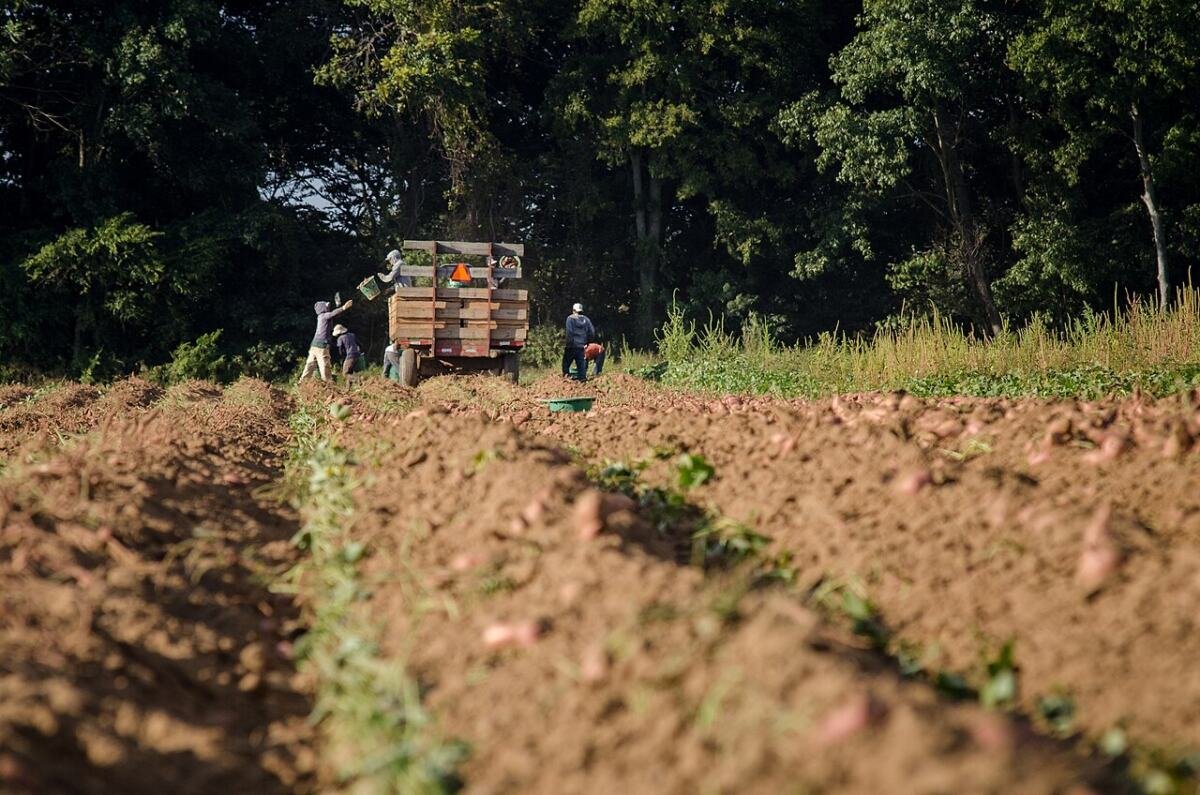
Harvest about 90 to 120 days after planting, and before frost. Mississippi State says to dig before the soil falls below 60°F. The University of Arkansas says before soil drops below 55°F and before the first light frost nips the vines. Clemson says cool soil can lower quality and storage life. SDSU says to dig when roots are 5 to 6 inches long and about 2 inches thick. Clemson says to start when 30 percent of the roots are wider than 3½ inches.
Dig gently, because the skins bruise easily. Do not wash the roots, say SDSU and Arkansas. Then cure them. Curing heals scrapes and helps the roots keep.
| Source | Curing | Storage |
|---|---|---|
| SDSU Extension | 80°F to 90°F, high humidity, 7 to 14 days | 50°F to 60°F, 3 to 4 months |
| Mississippi State | 80°F to 85°F, 85 to 90 percent humidity, 7 to 10 days | 55°F to 60°F. Below 55°F can cause chilling injury. |
| Clemson | 85°F and 90 percent humidity for a week, or 14 days in the warmest room of the house. No curing below 70°F. | Never below 50°F, never in the refrigerator. |
| University of Arkansas | 85°F and 90 percent humidity, 7 to 10 days | 60°F, and not below 55°F. |
Storing at 55°F to 60°F fits inside all four ranges. Harvest timing is the reason the planting date matters so much. A late planting pushes the harvest toward the frost, and a hurried dig in cold soil shortens storage life.
Frequently asked questions
Can I plant sweet potatoes on my last frost date?
It is risky. The date is an average, so frost can still come, and the soil is usually too cool. The Old Farmer's Almanac recommends waiting three to four weeks. SDSU Extension says to wait until all frost danger has passed and the soil is at least 65°F, and that temperatures below 50°F can damage the plants.
How warm should the soil be for sweet potato slips?
Most sources say at least 65°F, measured about 4 inches down. The University of Arkansas says 60°F, and Harvest to Table says 70°F. Use 65°F as your default, and 70°F if your spring swings between warm and cold.
How late can I plant sweet potatoes?
Count back from your first fall frost by your variety's days to maturity. With a first frost on October 5 and a 100-day type, the latest date is June 27. That is date math, not an extension claim. Plant earlier if you can, because a Missouri study found yields fell as planting dates slipped later.
Can I grow slips from a grocery store sweet potato?
You can try, but the roots may not sprout. SDSU and Clemson Extension say grocery store sweet potatoes are often treated to stop sprouting. Organic roots, or roots from your own harvest, are more likely to sprout.
How many days do sweet potatoes take to grow?
Most types take 90 to 120 days, according to Mississippi State and Clemson Extension. Clemson lists Jewel at 120 to 135 days. Both list Beauregard at 90 to 100 days.
Can I leave sweet potatoes in the ground after a frost?
No. SDSU Extension says that once a hard frost has killed the tops, the roots are at risk of rotting. The University of Arkansas says sweet potatoes left in the ground for storage will rot. Harvest before frost, then cure them.
Do I need to cure sweet potatoes?
Yes. Curing heals harvest wounds and helps the roots keep. SDSU says 80°F to 90°F with high humidity for 7 to 14 days. Mississippi State says 80°F to 85°F with 85 to 90 percent humidity for 7 to 10 days. Then store them at 55°F to 60°F and never refrigerate raw roots.
Sources
- SDSU Extension, Sweet Potatoes: How to Grow It (updated September 9, 2025)
- Mississippi State University Extension Service, Growing Sweet Potatoes at Home, Publication 2784 (revised 2022)
- Clemson Cooperative Extension, Sweetpotato, HGIC 1322 (updated April 13, 2022)
- University of Arkansas System Division of Agriculture, Sweet Potatoes, FSA6018 (2009 revision)
- University of Missouri, Sweet Potato Field Planting Date Influences Yield in Missouri (April 28, 2023)
- The Old Farmer’s Almanac, Planting and Growing Sweet Potatoes (October 9, 2026)
- Harvest to Table, When to Plant Sweet Potatoes (November 2025)
Where sources give different numbers, we say so in the text. Older pages, such as the 2009 Arkansas publication, may reflect older varieties and practices.
Image credits
- Featured image: Indy beetle, CC0, Wikimedia Commons
- Sprouting slips: Geo Lightspeed7, CC BY-SA 4.0, Wikimedia Commons
- Soil thermometers: Witia, CC BY-SA 4.0, Wikimedia Commons
- Sweet potato vines: Ainomugisha Brendah, CC BY-SA 4.0, Wikimedia Commons
- Harvested sweet potatoes: USDA, public domain, Wikimedia Commons
Published by Sajib Saha, a web developer and SEO specialist. This guide is compiled from the extension sources named above, not from personal horticultural credentials. See About and our editorial policy.